Platform wagon PW
for BGE
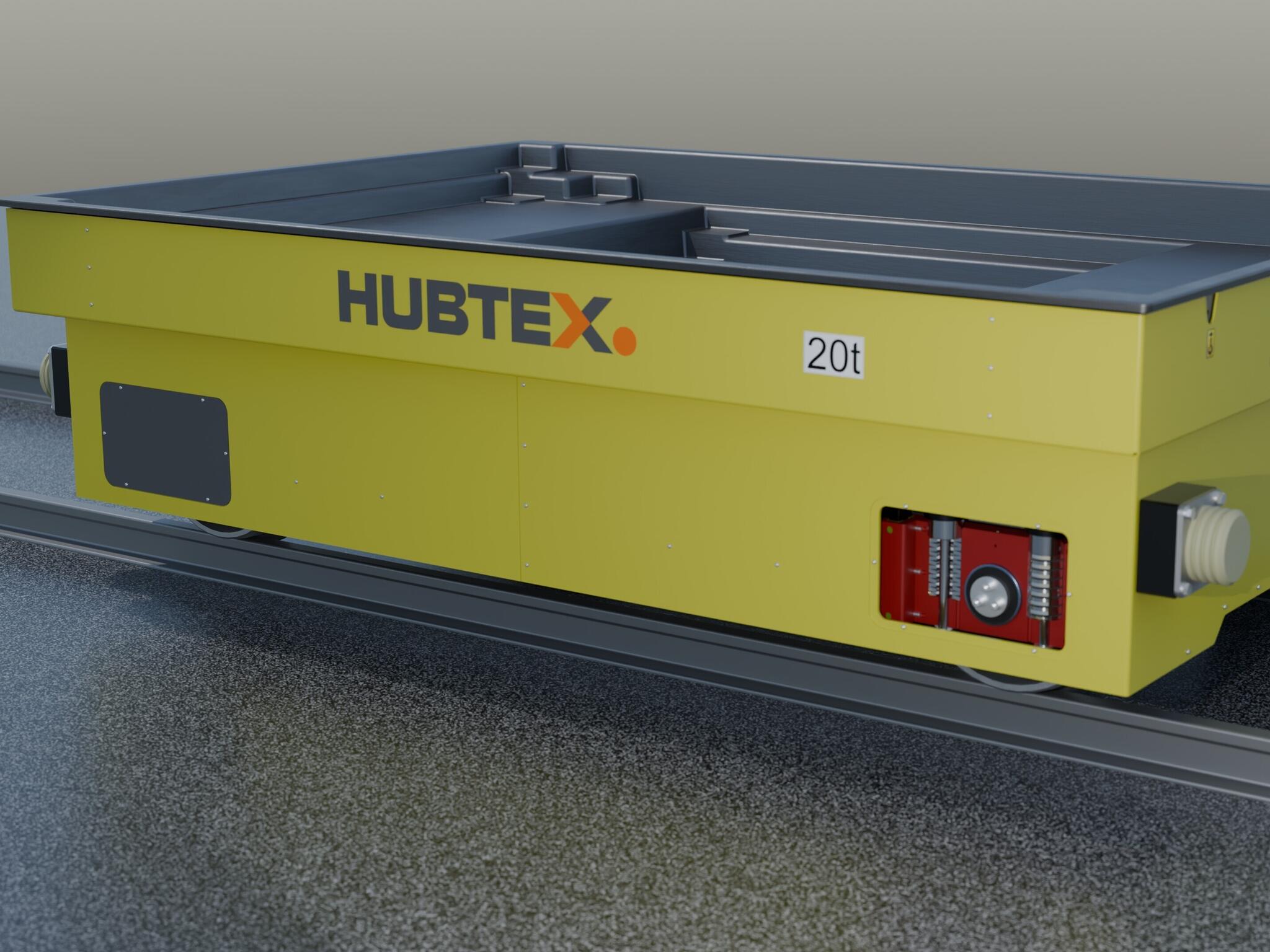
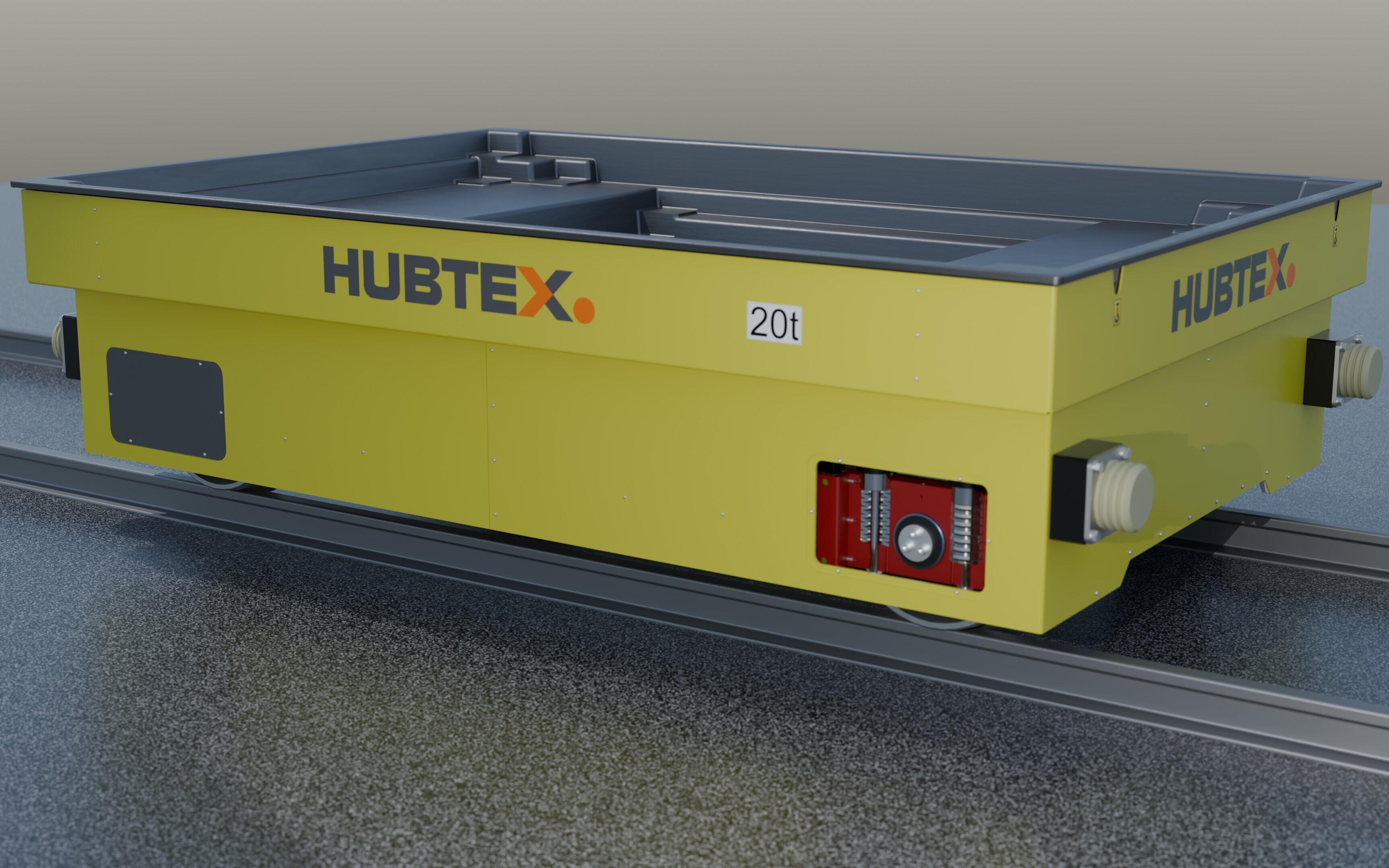
The PW platform wagon is a rail-mounted heavy-duty platform without its own drive, built by HUBTEX as a custom solution for the German Federal Company for Radioactive Waste Disposal (BGE). Twenty-five wagons were made for the project. They are intended to carry transport units containing radioactive waste, exchange pallets and drums containing operational waste from the controlled area. The wagons form part of a defined transport process within the storage operation.
The former Konrad iron ore mine in Salzgitter is being converted by BGE into a repository for low- and intermediate-level radioactive waste. The HUBTEX wagons have been completed and placed in storage for later operation.
Use at BGE
In future operation, the rail-mounted wagons will support internal transport in the controlled area. They have no propulsion of their own and are moved by the specified conveying and loading equipment. Transport units can be carried on the rail system to transfer points in the storage process.
Secure transport and defined positioning on the rails
Each wagon is designed to carry one transport unit: a container in which the waste is prepared for the storage process. Its construction supports secure retention and repeatable alignment. A closed, level cradle surface and a stepped cradle support stable positioning of the unit. An interface for rail position detection is provided for integration into the facility’s operation.
Designed for demanding conditions in the controlled area
The design takes maintenance and servicing into account. Continuous welds and closed joints make cleaning easier. Corrosion protection and reuse are also addressed.
Quality assurance through defined inspections and approvals
The project specifies strict requirements for documentation, materials and inspections, including material certificates and defined component and weld inspections. Manufacturing may begin only after the documents have been reviewed and approved. This framework supports traceability and controlled implementation across project phases.
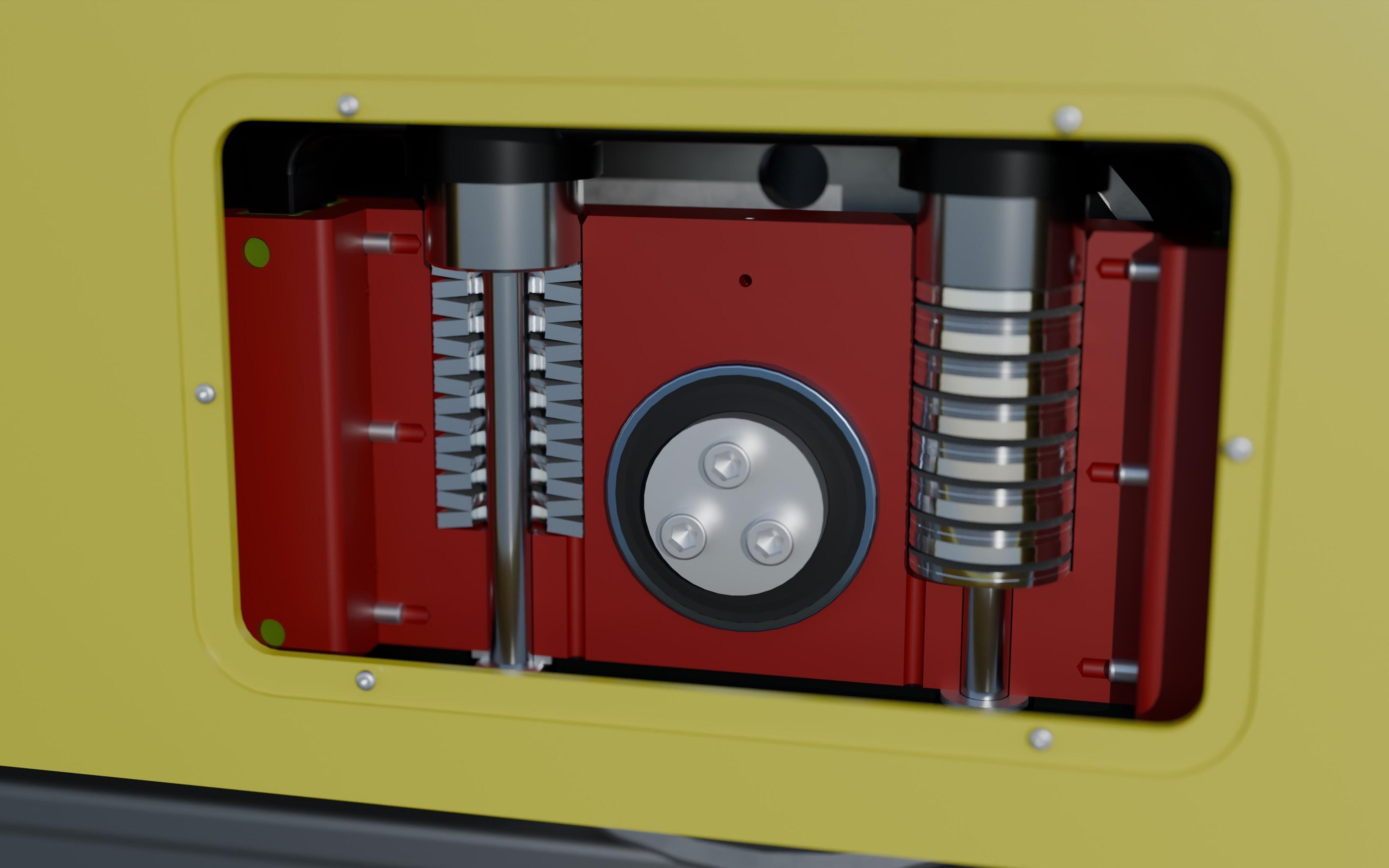
The wagon is rail-mounted and has no drive of its own. Defined interfaces connect it to the intended rail conveying system.
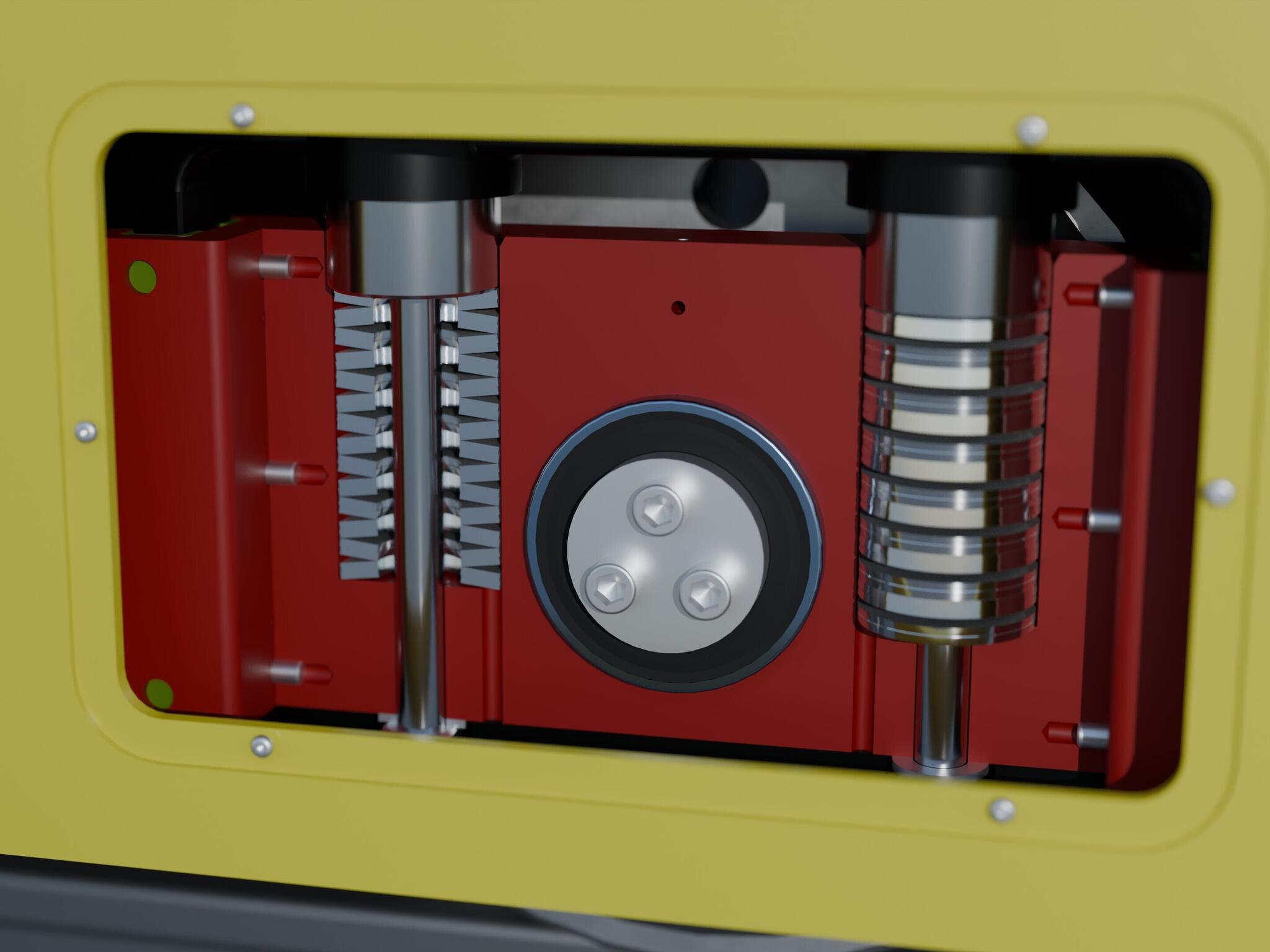
The steel construction comprises running gear, frame and cradle. The cradle is cast from austenitic steel, with corrosion resistance and ductility. Two axles with wheels guide the wagon on the rails, and the welded frame supports the load.
Frame-mounted shock absorbers and sprung axle bearings are provided for rail operation. Defined connection points link the wagon to the facility’s carriers and transfer equipment.
A stepped cradle retains and aligns the transport unit. Its geometry is described as preventing jamming and accommodating and guiding the unit within specified tolerances. End walls and overlaps support centring and attachment of the cradle to the frame.
Vehicle specification
Vehicle weight: approx. 4.1 t
Load capacity: up to 20 t
Length: 3,600 mm
Width: 2,330 mm
Height: 970 mm
Maximum speed, loaded: 0.2 m/s
Rail-bound