
TW transport vehicle for BGE
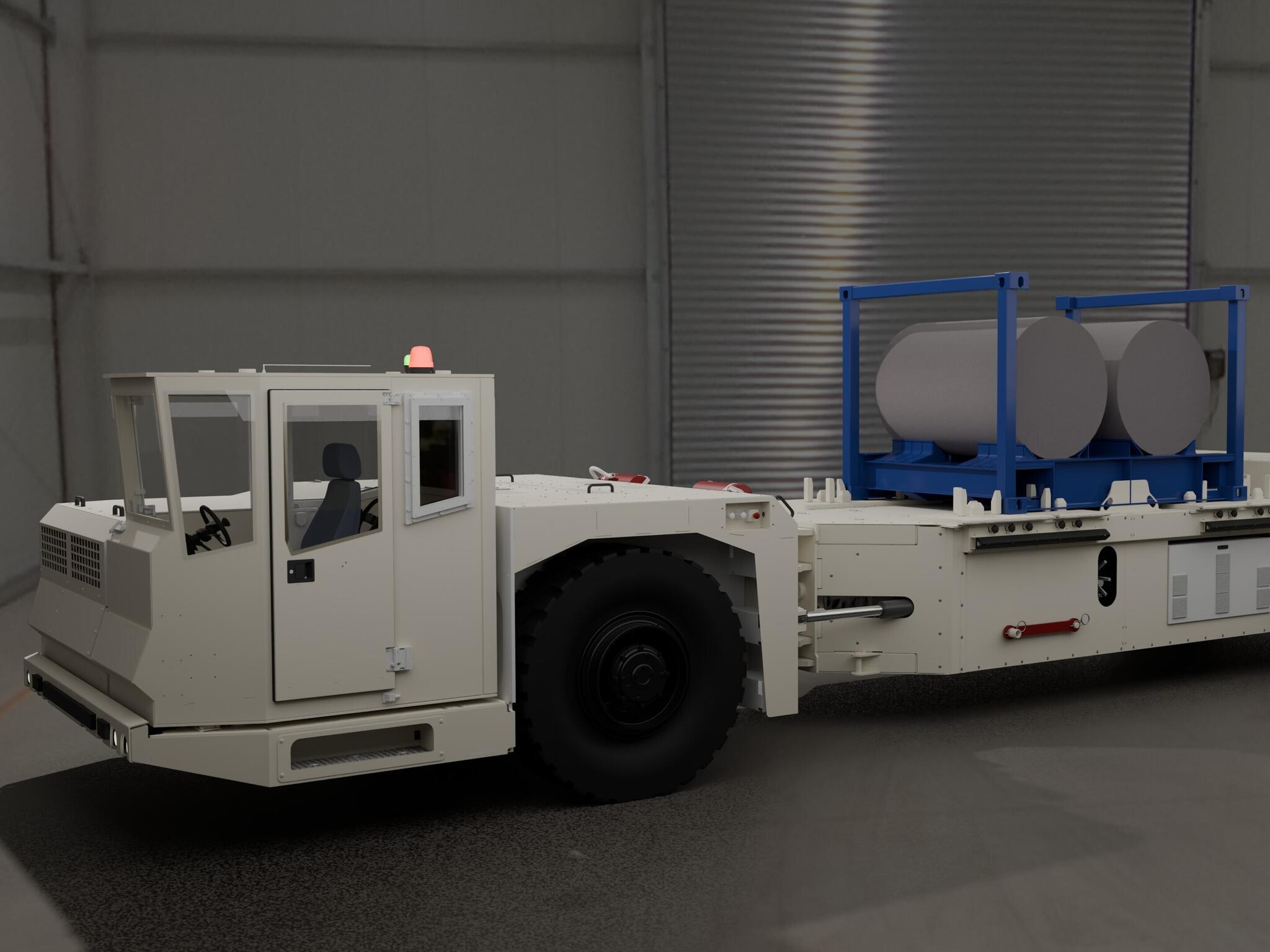
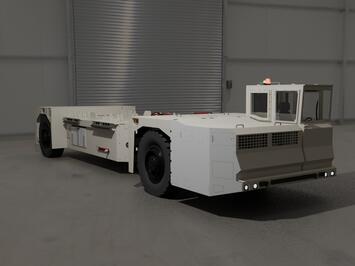
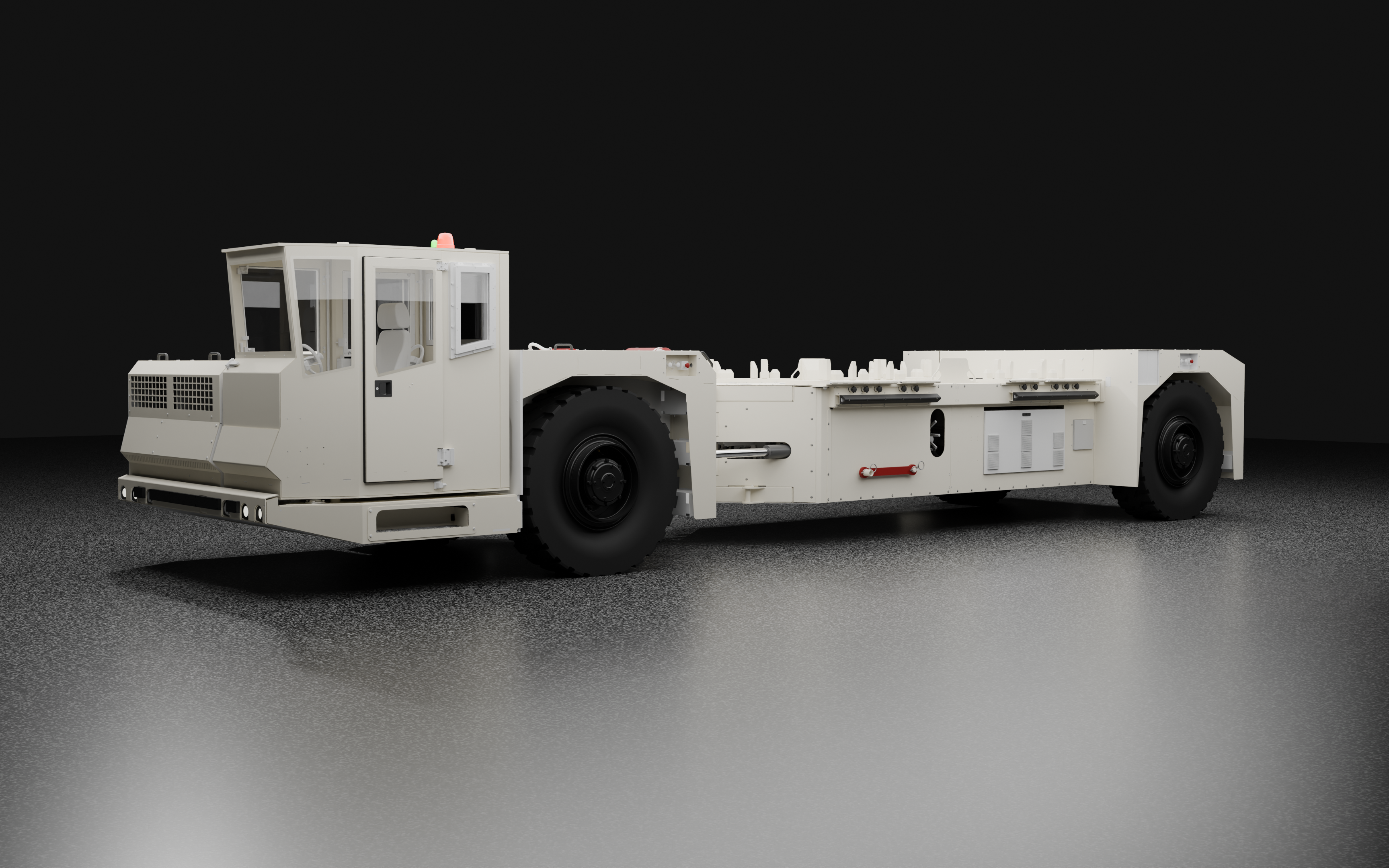
HUBTEX developed the TW as a customer-specific vehicle for the Federal Company for Radioactive Waste Disposal (BGE). It is intended for future use at the Schacht Konrad repository project, transporting units containing radioactive waste safely through underground areas. These units are the designated transport containers in which the waste is prepared for emplacement. The vehicle travels along defined routes between transfer points where the containers are taken over or handed on for the next steps. It can also move containers of radioactive operational waste within the controlled area.
Use at BGE
Schacht Konrad is a former mine in Salzgitter being converted by BGE into a repository for low- and intermediate-level radioactive waste. Future operation requires special vehicles designed for underground material transport and clearly defined safety procedures. The TW forms part of that vehicle concept.
In the underground roadways it moves radioactive-waste transport units between defined transfer points in the emplacement process. The shaft station is a key underground staging and handover area, where units are received and passed to the next process step.
The TW carries the units from the shaft station to the unloading chamber for transfer to the stacking vehicle. It then returns to collect further units or return empty transport pallets to the process, supporting a continuous, controlled material flow.
Reliable transport on defined routes
The vehicle is designed for repeated journeys between specified points in the emplacement process. It carries radioactive-waste containers along a defined route and supports reliable handover to the next step. This contributes to an orderly process and provides the basis for safe, traceable material transport within the repository project.
Protection and safety underground
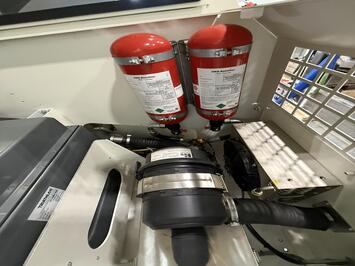
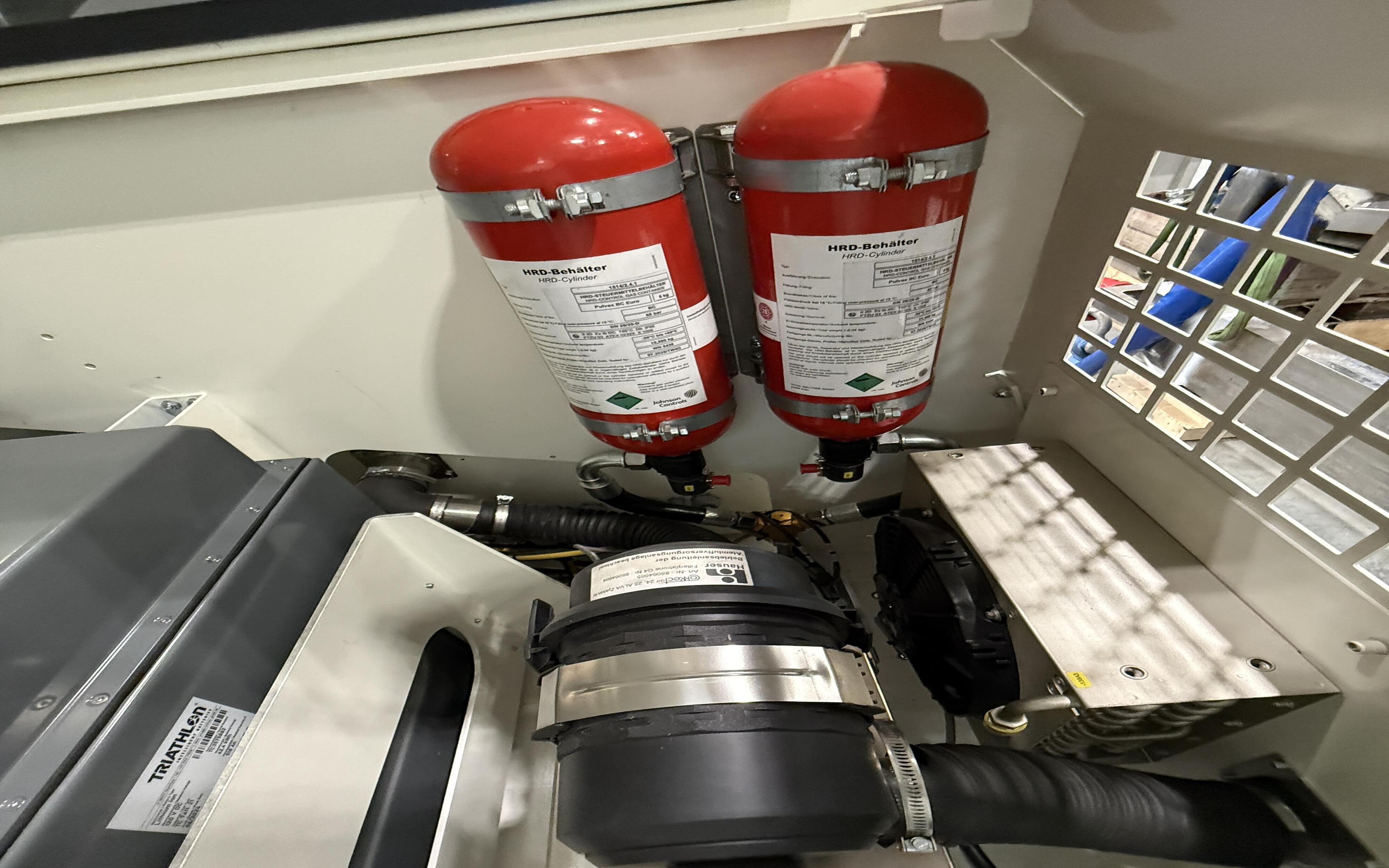
Measures are specified to limit risks underground. These include a shielded driver’s cab to limit exposure, fire-fighting equipment and requirements to limit fire load and prevent collisions at higher travel speeds.
Integration into facility operations
Communication with the local control station at the shaft station and with the stacking vehicle, together with positioning aids at the shaft station, helps coordinate the vehicles and position them reproducibly at transfer points.
Features
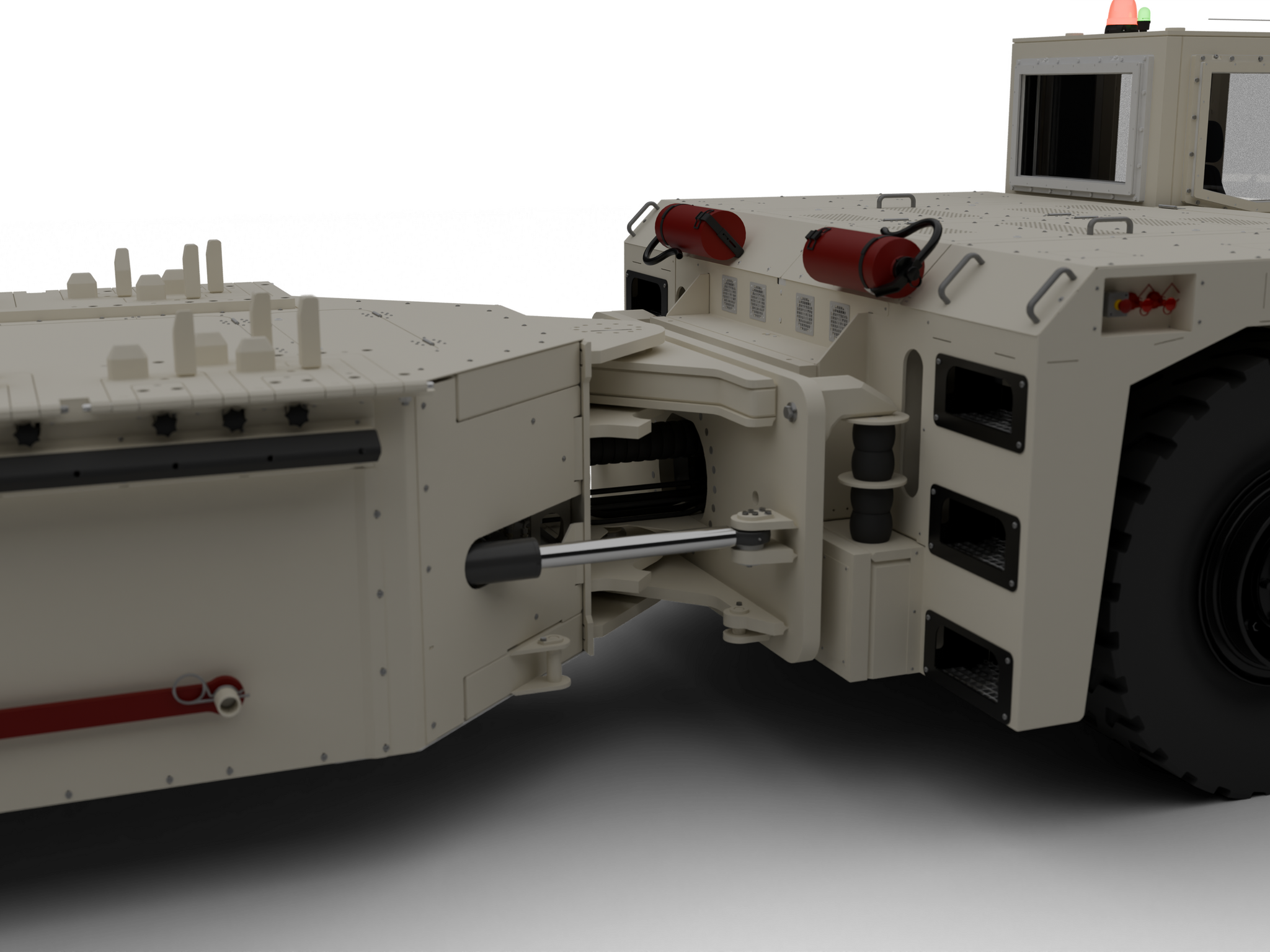
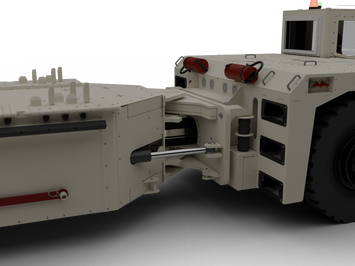
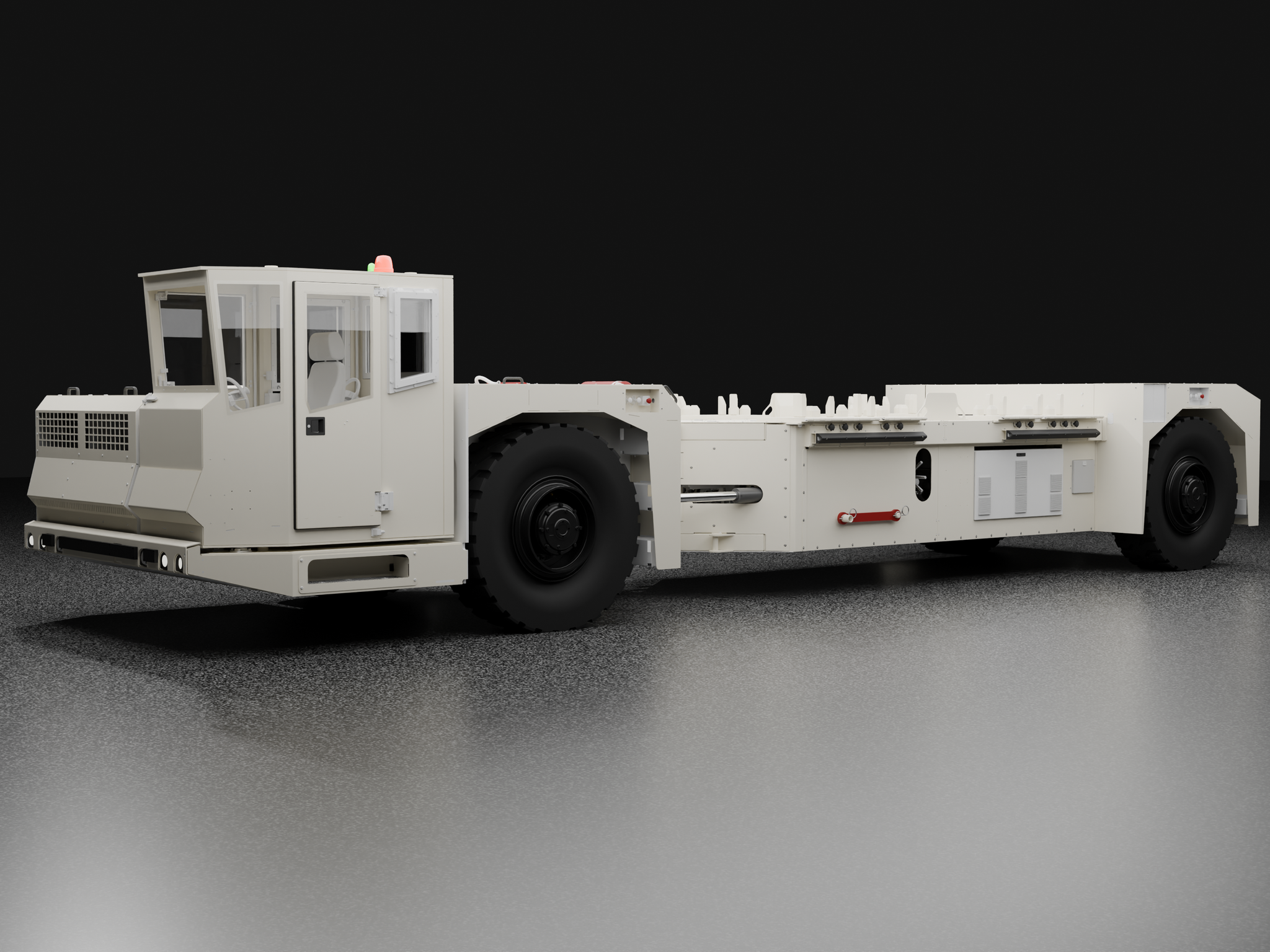
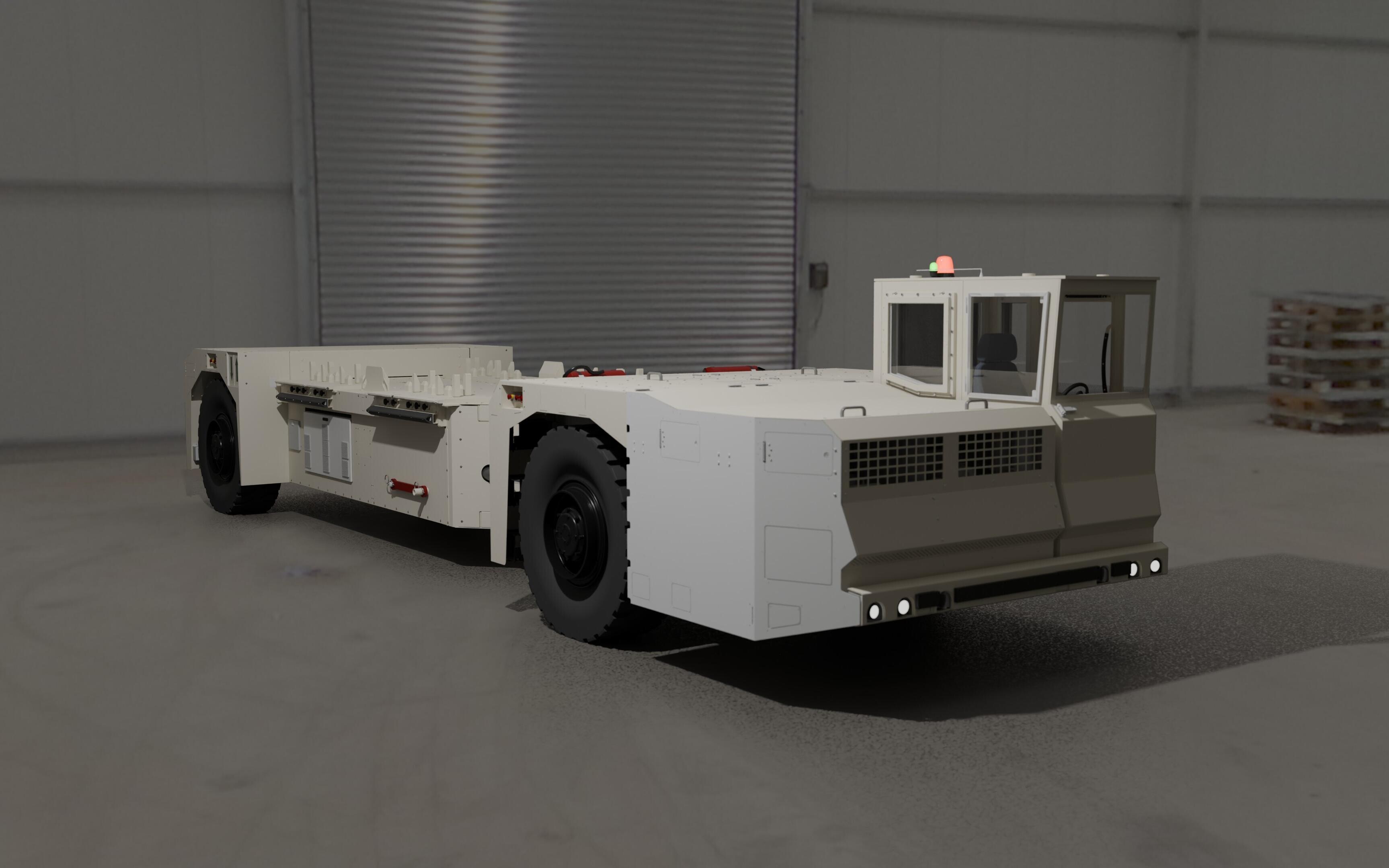
The TW is a trackless, all-wheel-drive vehicle. Its chassis uses a pivoting articulated joint to manoeuvre safely in the underground roadways.
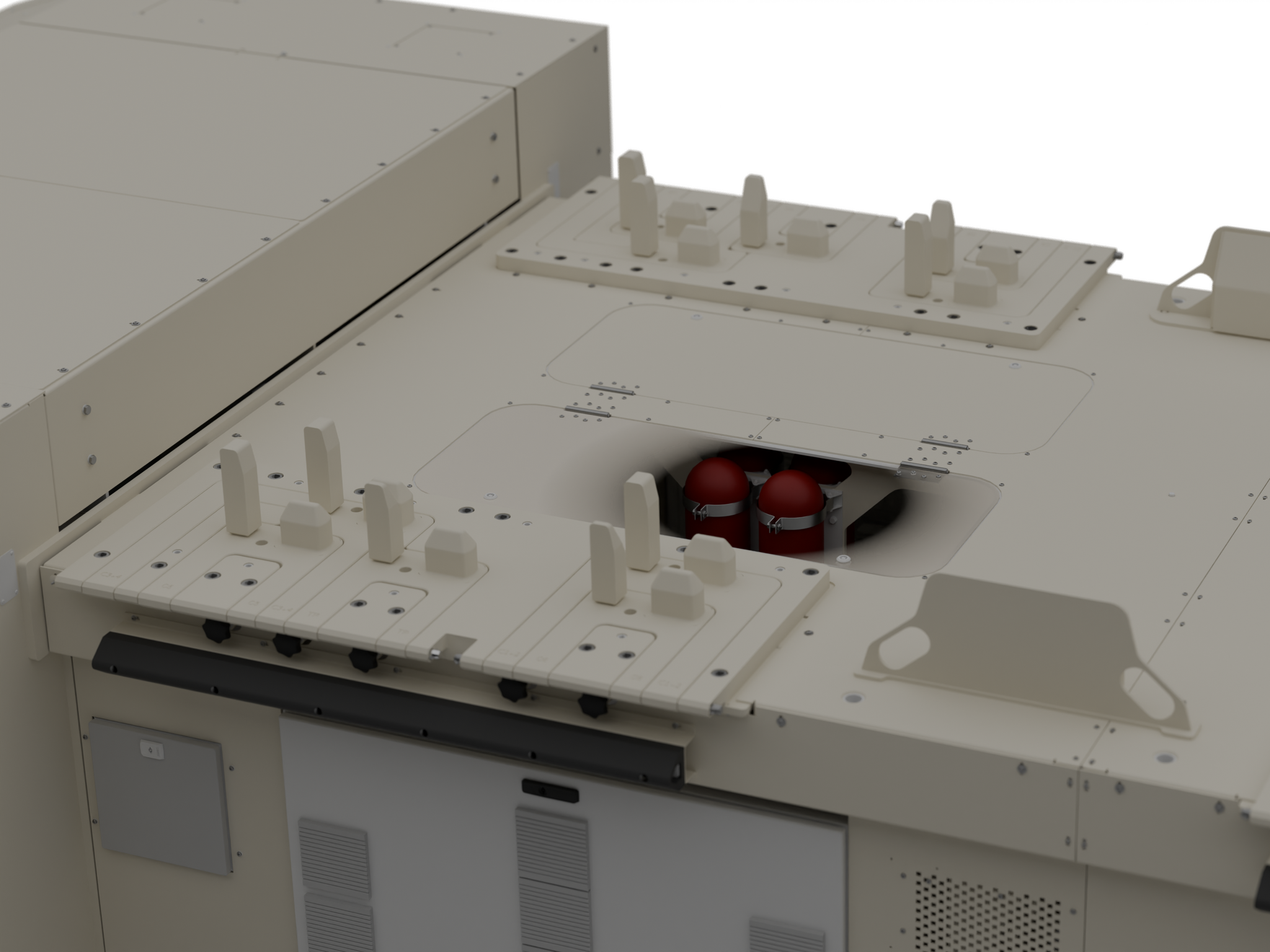
The platform accommodates different transport units. Fold-down locating pins can be adjusted to each unit and engage designated points to secure it. Lock monitoring supports safe travel.
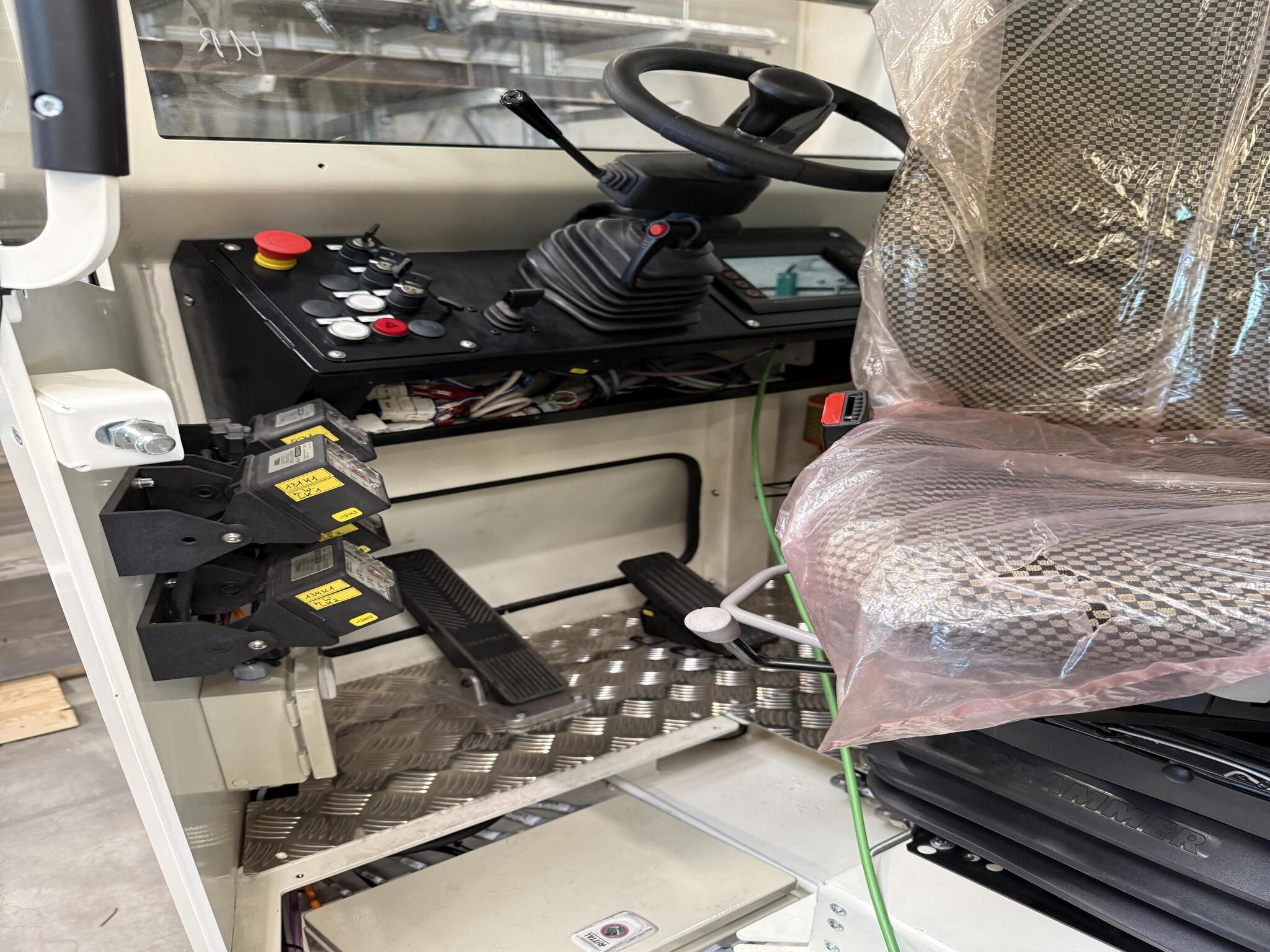
The cab is shielded in accordance with the requirements and is air-conditioned. The driver’s seat can be rotated for travel in the opposite direction; duplicate controls are provided for this purpose.
Service and parking brakes act on all wheels. An additional continuous braking device is provided for gradients to keep speed controlled on demanding routes. Emergency steering allows the vehicle to be steered even if the drive motor fails.
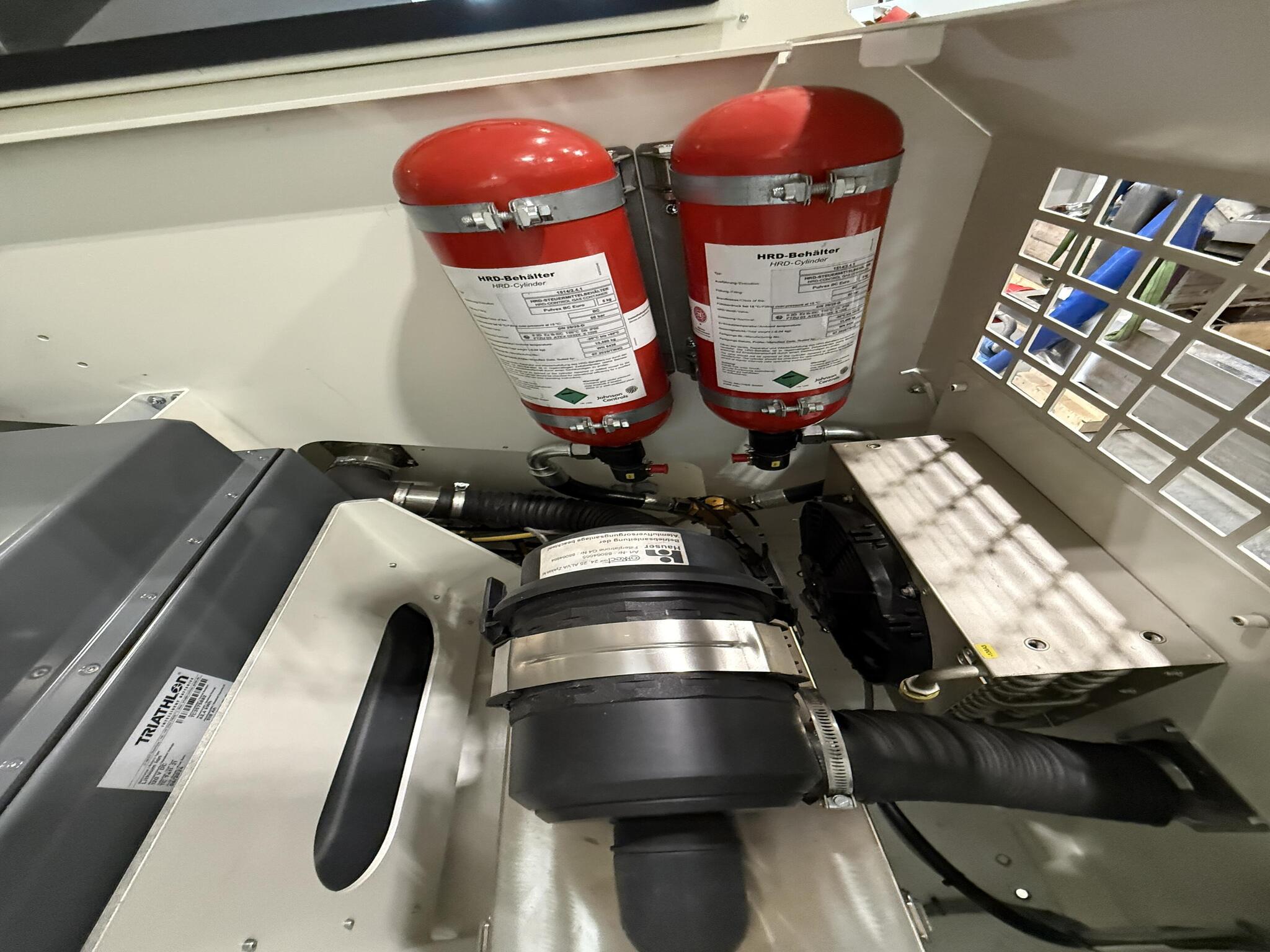
A fixed on-board fire suppression system is designed for defined firefighting operations. Temperature sensors report a fire through display and warning functions. Hand extinguishers are also provided on the vehicle. Surfaces and coatings are designed to allow decontamination of the vehicle and its equipment.
Vehicle specification
Vehicle weight: approx. 28 t
Load capacity: up to 20 t
Length: 11,200 mm
Width: 3,100 mm
Height: 2,500 mm
Maximum speed: 4 m/s
Electric motor