Find out in 5 steps!
Bild
AGC Zeebrugge relies on continuity in glass logistics
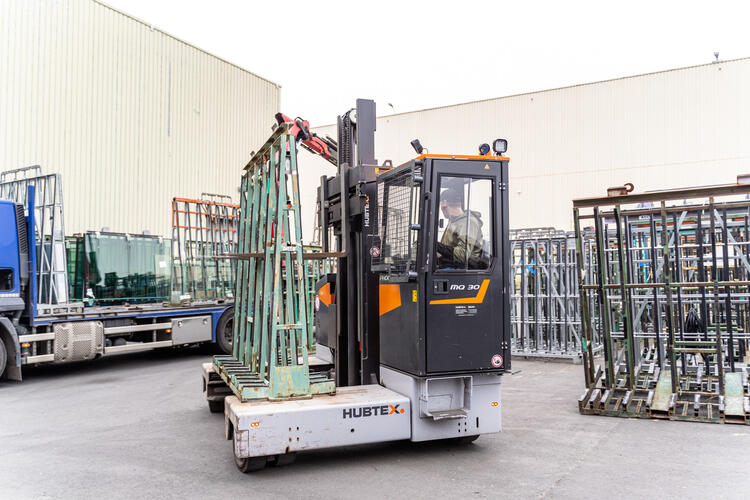
Two HUBTEX multidirectional sideloaders keep materials moving between the plant, ramp, and outdoor storage.
Application profile: Narrow aisles, a grade ramp, frequent direction changes
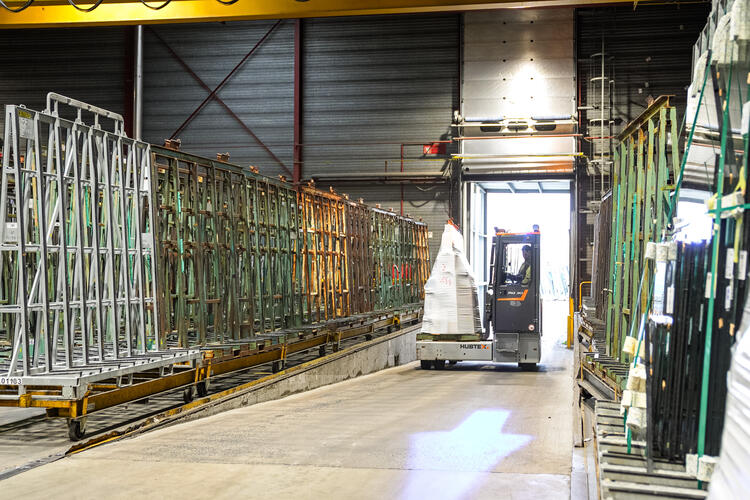
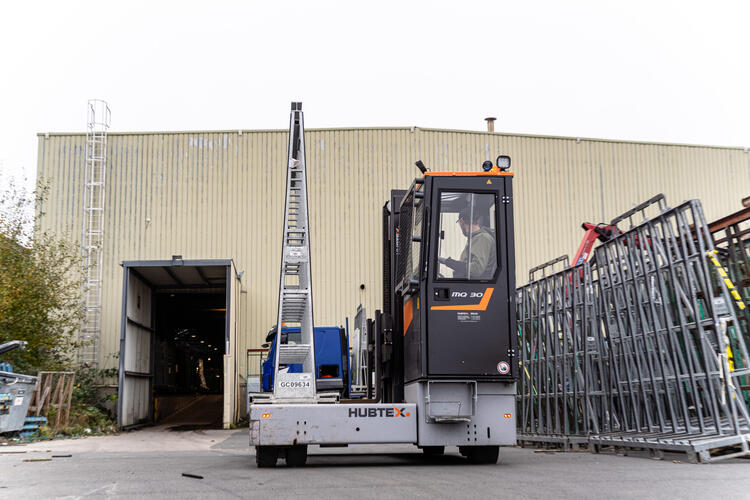
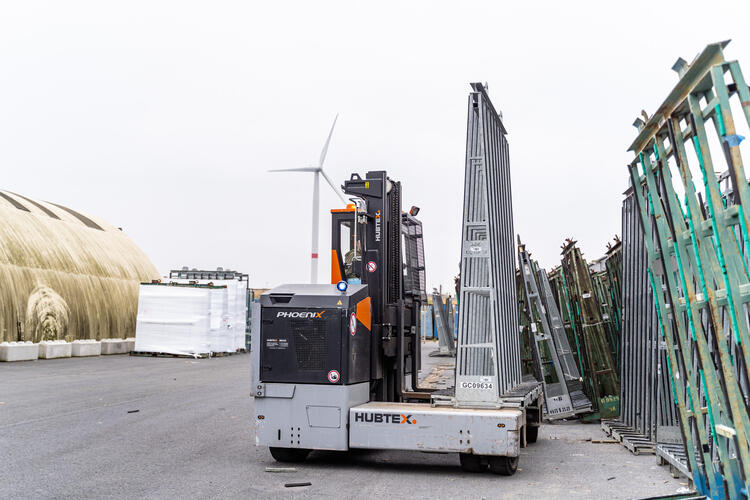
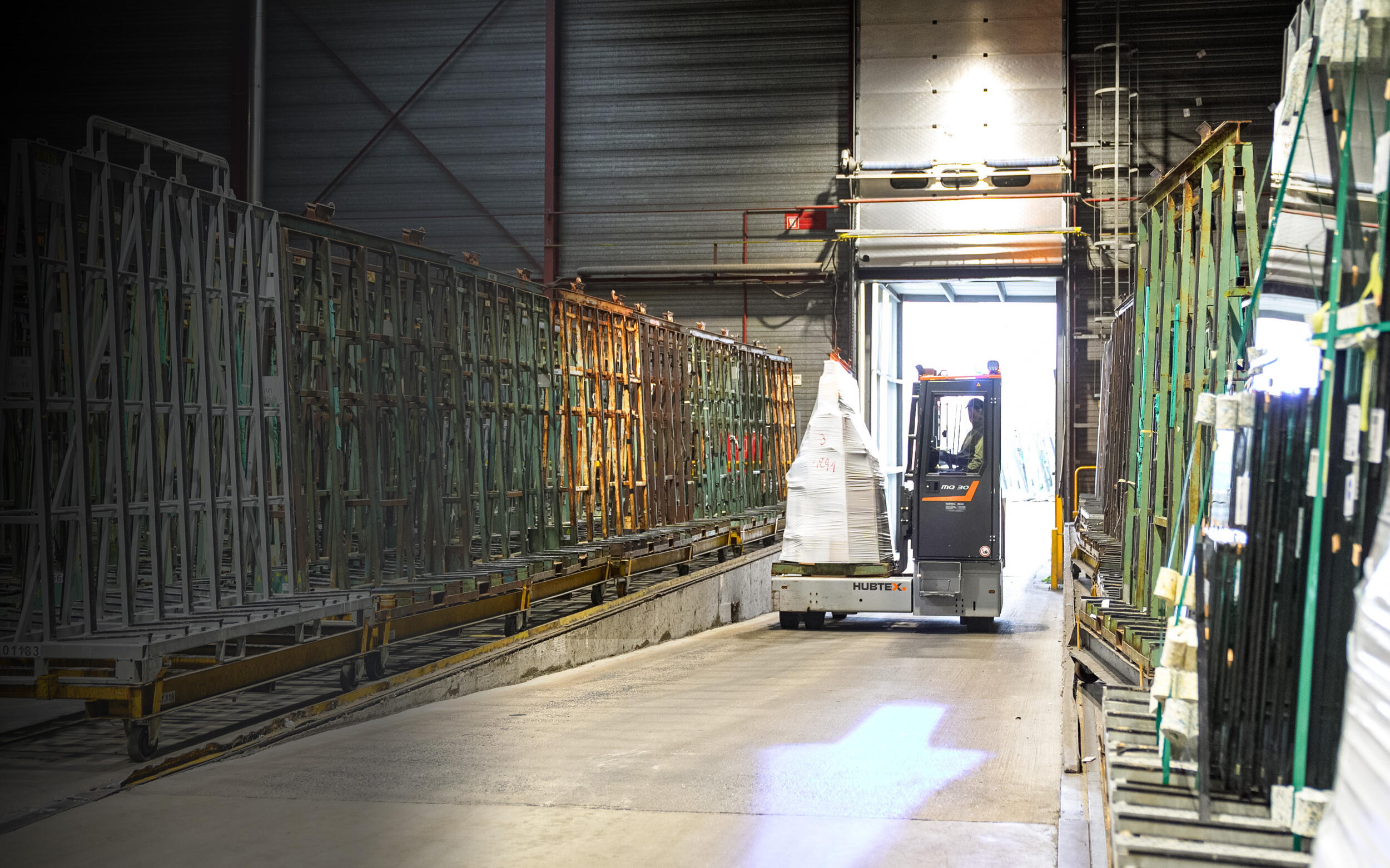
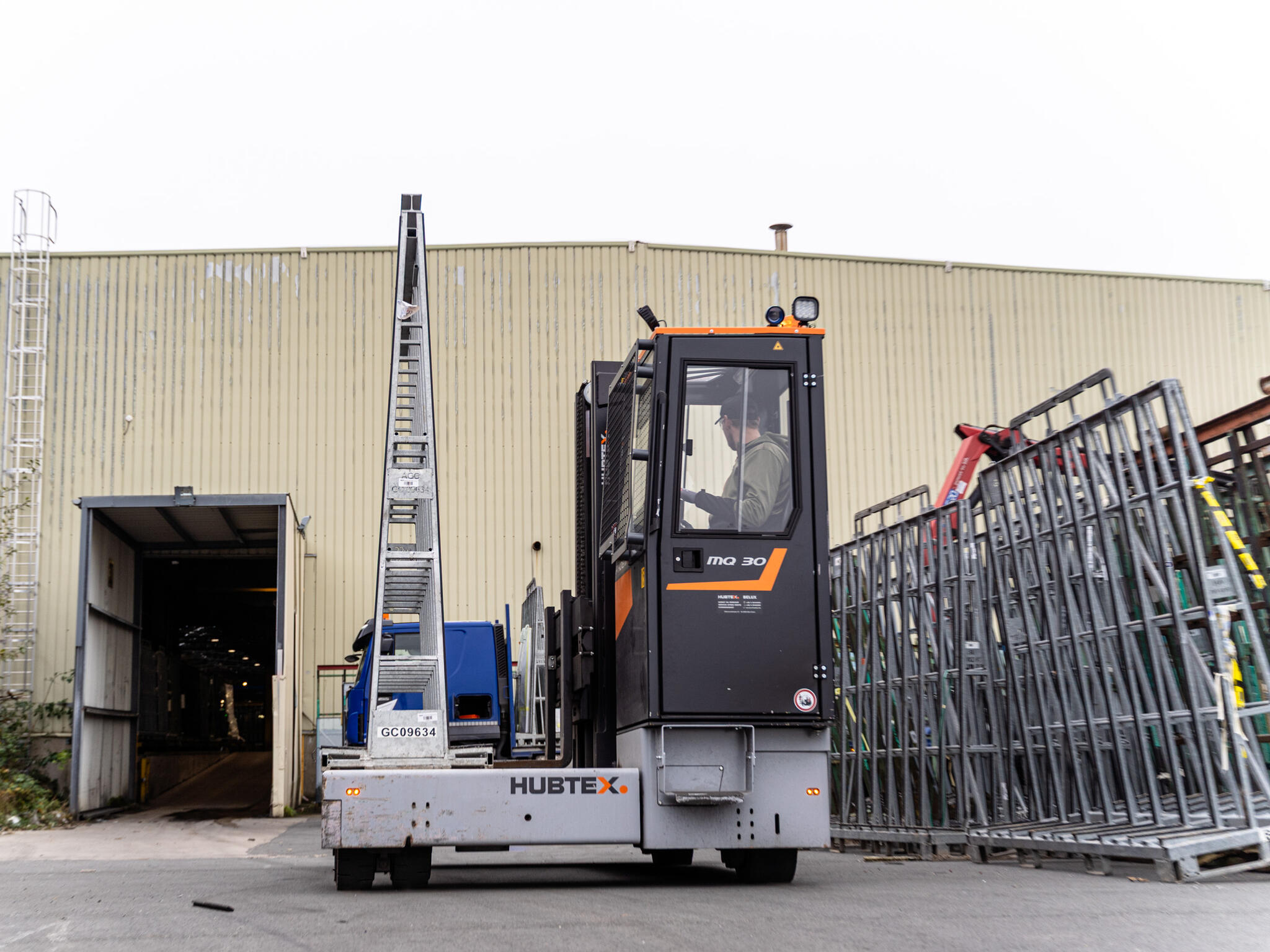
At AGC Seapane in Zeebrugge, Belgium, multidirectional sideloaders move empty and loaded glass racks every day between warehousing, production, and truck loading. One HUBTEX MQ 30 has been in operation for almost 15 years on a two-shift schedule—primarily indoors, with about 25% of trips going outside. Loading and unloading take place outdoors. A ramp with a 4.7% grade connects the areas.
The layout reflects typical requirements in the glass industry: safe load handling with high centers of gravity, precise maneuvering in narrow travel lanes, predictable behavior when passing through doorways, and rugged performance under changing weather conditions.
Technology in detail: multidirectional steering, visibility, and traction
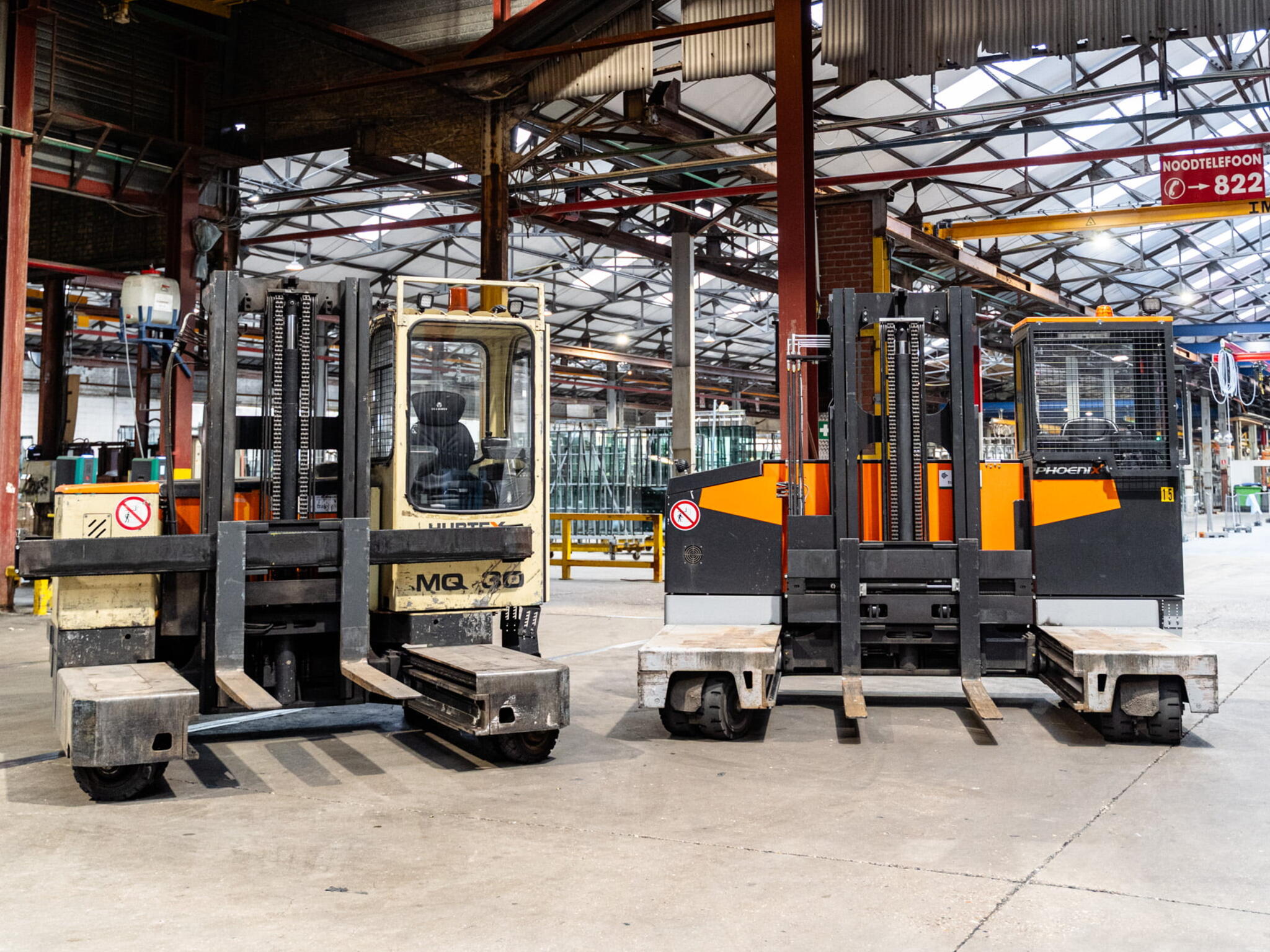
Both the long-running MQ 30 and the PHOENIX MQ 30 added in early 2024 offer a 3-ton capacity and multidirectional steering with four modes (straight, lateral, circular, and diagonal travel). This minimizes repositioning in tight aisles and enables pinpoint placement at racks and on the ramp.
The enclosed cab supports the indoor/outdoor mix, while LED work lights and visual warning signals improve awareness in high-traffic areas. The result: smooth handling on the grade, safe lifting of tall racks, and short travel times between indoor and outdoor storage.
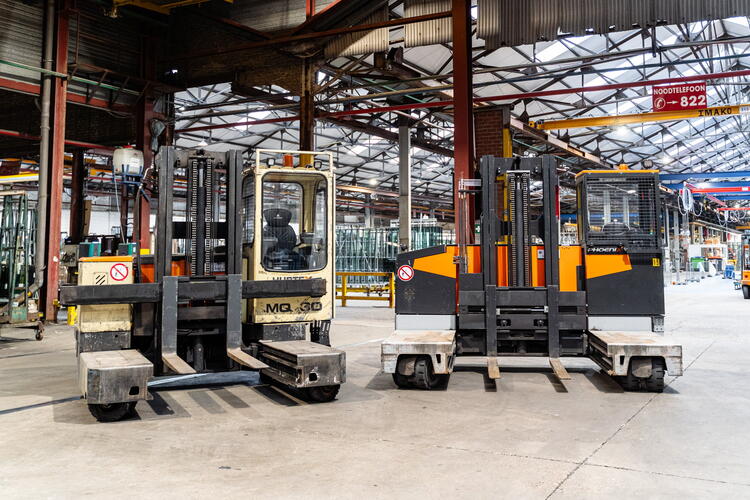
The new PHOENIX handles the majority of transports, while the older MQ 30 is kept as a backup—covering peak demand and planned maintenance windows. Because the control concepts and steering programs are identical, operator onboarding is fast and straightforward.
Which multidirectional electric sideloader best fits your operation?
Choosing uptime: a competitor truck was purchased—and replaced
After about ten years of service, AGC planned a fleet update and purchased a competitor unit. In day-to-day operation, however, it did not consistently meet requirements—frequent direction changes, precise maneuvering in tight aisles, and reliable ramp performance. To maintain the required uptime, the proven MQ 30 remained in service.
In early 2024, AGC returned to the familiar approach: a second HUBTEX joined the fleet with the PHOENIX MQ 30, and the competitor unit was phased out. The outcome: higher reliability through redundancy, more efficient workflows thanks to standardized equipment, and reduced training effort.
Conclusion
AGC Seapane stabilizes material flow with two HUBTEX multidirectional sideloaders along the entire route—from the plant, up the ramp, and out to truck loading. The combination of maneuverability, visibility, and traction fits the real-world layout with narrow travel lanes and outdoor storage—clearly prioritizing uptime.
HUBTEX sideloader in operation