Underground Backfill Transport Vehicle VTF
for BGE
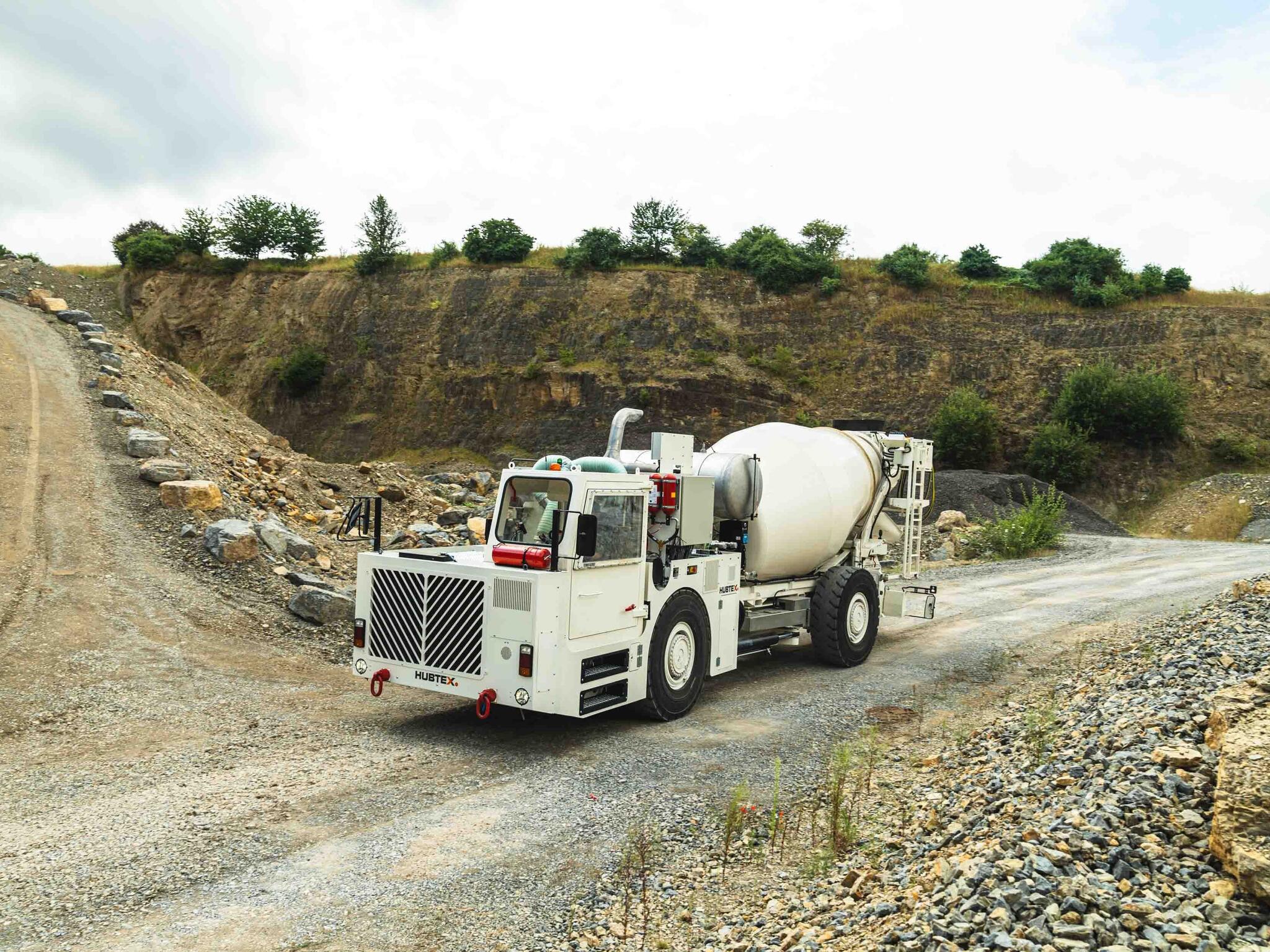
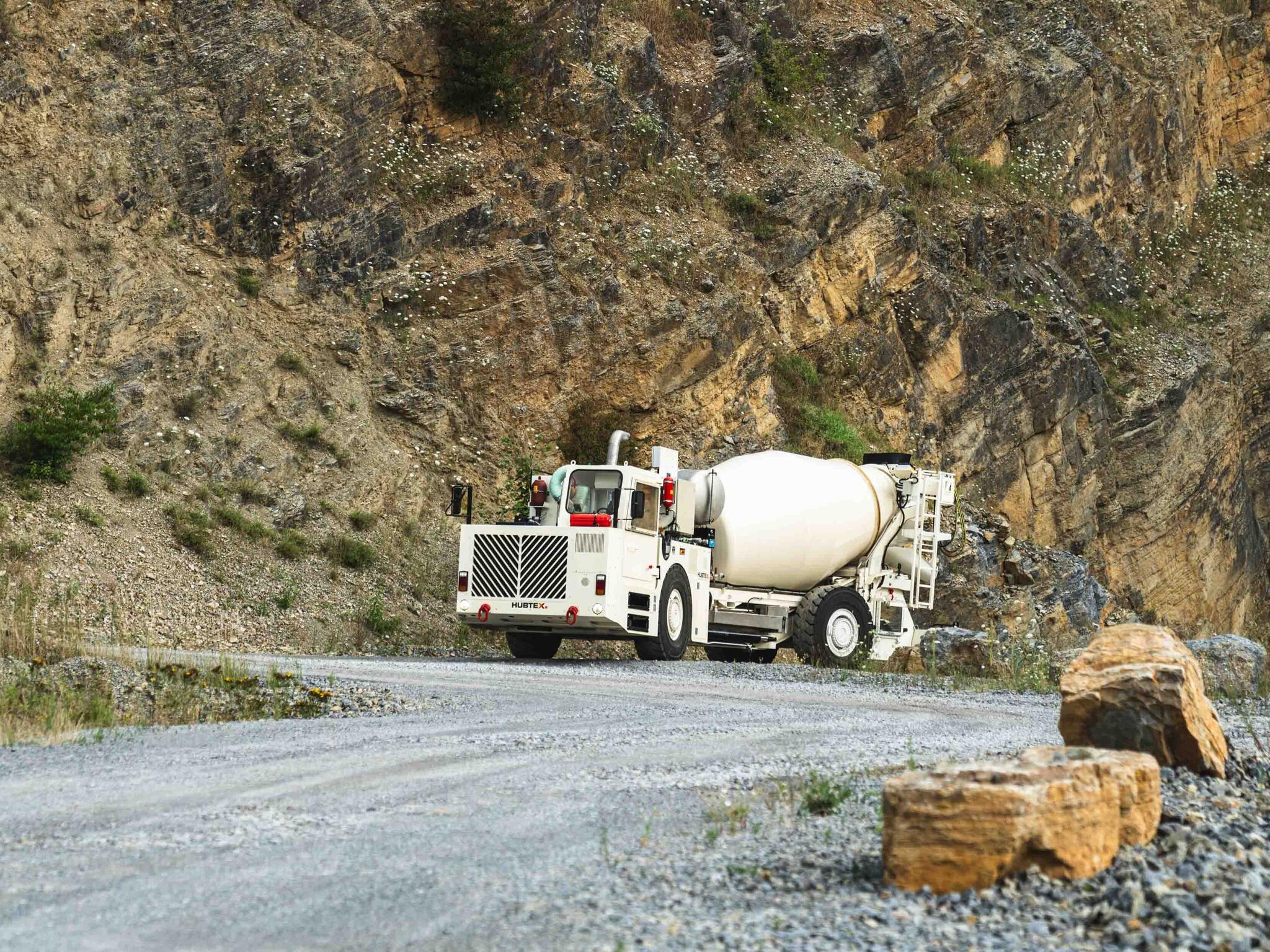
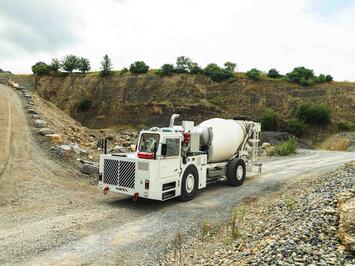
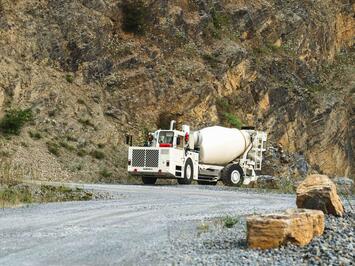
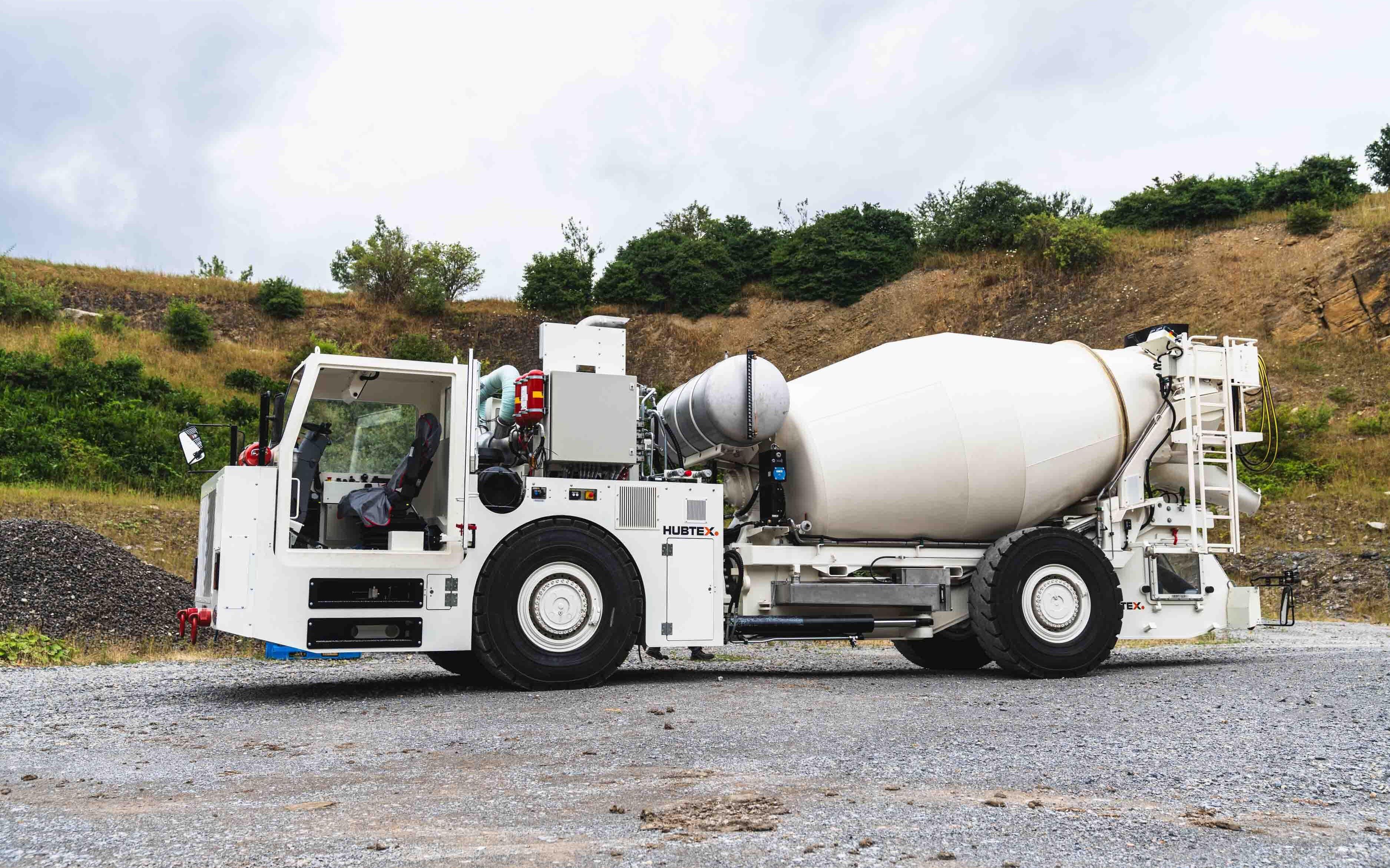
The VTF backfill transport vehicle is a bespoke special-purpose vehicle developed by HUBTEX for the Federal Company for Radioactive Waste Disposal (BGE). It is designed for future underground operation as part of the Schacht Konrad repository project.
Schacht Konrad is a former mine currently being converted into a repository for low- and intermediate-level radioactive waste. To enable the emplacement chambers to be backfilled after the emplacement process, backfill materials are used underground, including backfill compound and high-density slurry.
The VTF transports these materials from the underground processing facility to the designated work areas, where it transfers them in a controlled manner to the subsequent process stages.
Use at BGE
Schacht Konrad is being converted by BGE into a repository for low- and intermediate-level radioactive waste. Once the radioactive waste containers have been emplaced, the underground areas are backfilled with backfill material. This permanently encapsulates the emplaced waste and safeguards it against release.
These operations require vehicles that are precisely adapted to the underground roadways and to the specific requirements of the controlled area.
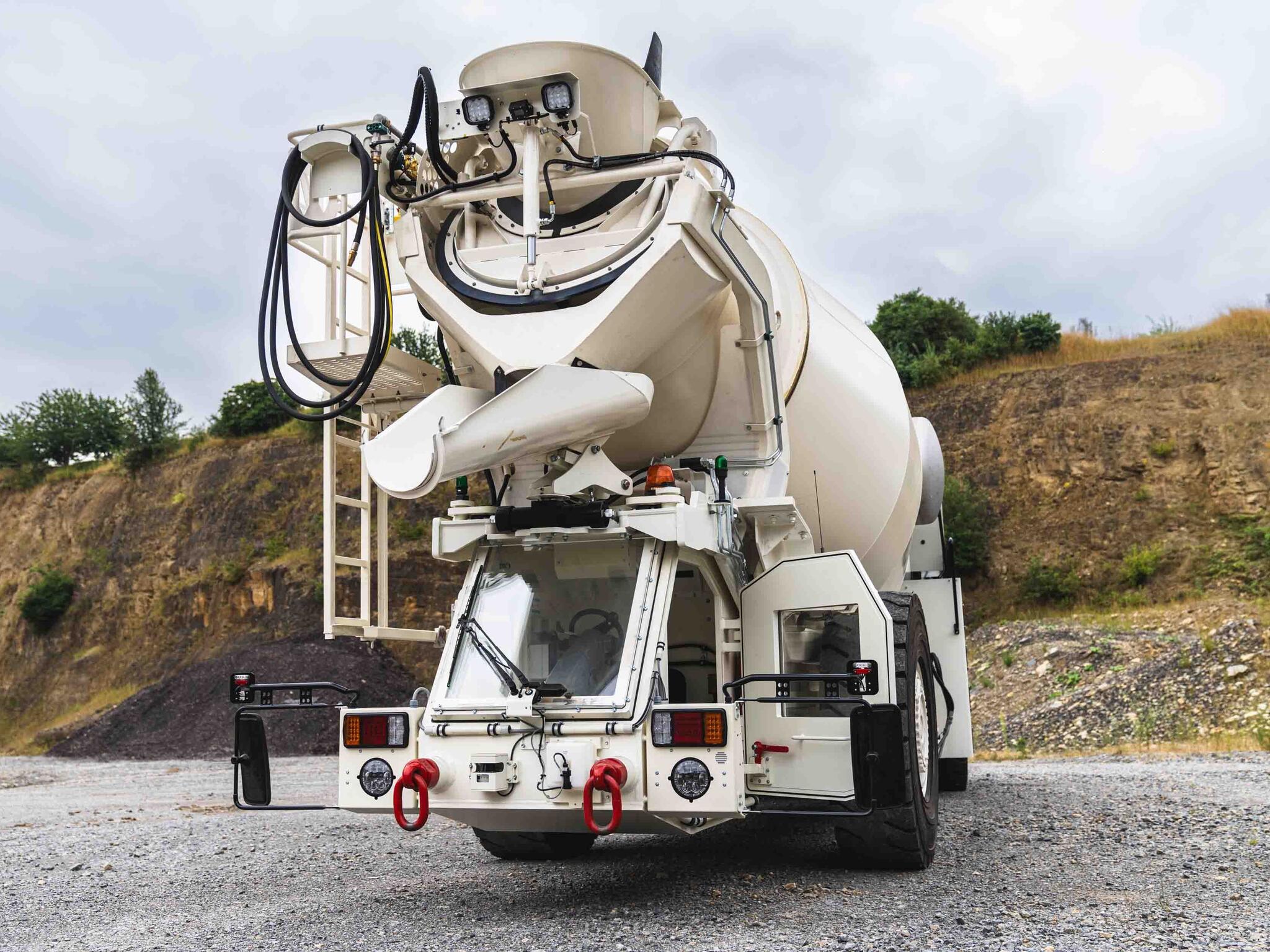
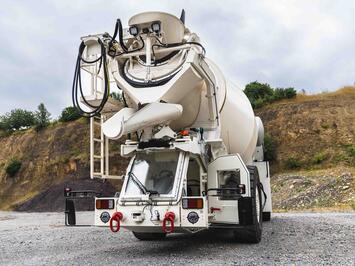
The VTF travels between the underground backfill preparation plant and the relevant target location. There, the material is transferred into the mixing drum and transported to the place of use. Discharge takes place via the outlet chute into the feed hopper of the spray-manipulator vehicle. Depending on the work step, the high-density slurry can also be introduced for backfilling through ventilation boreholes.
Support for security-related procedures in the security control area
Clearly defined requirements and procedures apply to underground operations. The VTF backfill transport vehicle has been designed to support these conditions within the controlled area and to provide the required materials at the right stage of the process.
Controlled material discharge as a clearly defined interface
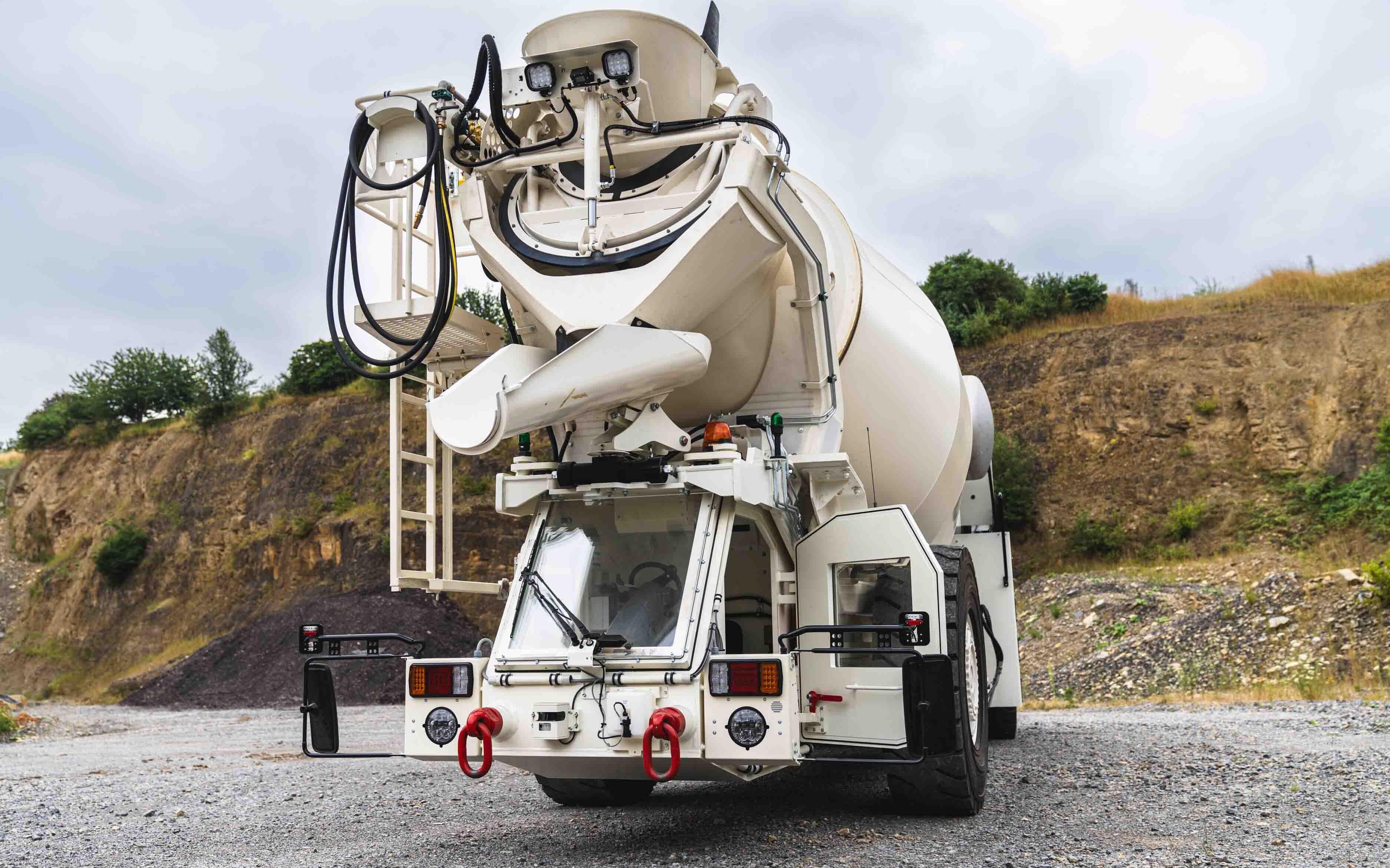
Material discharge at the point of use is designed as a clearly defined transfer step. The backfill compound is transferred to the spray manipulator vehicle via the outlet chute and feed hopper. This ensures transfer at a defined interface, allowing the next stage of work to follow seamlessly.
Safety and fire protection for underground operations
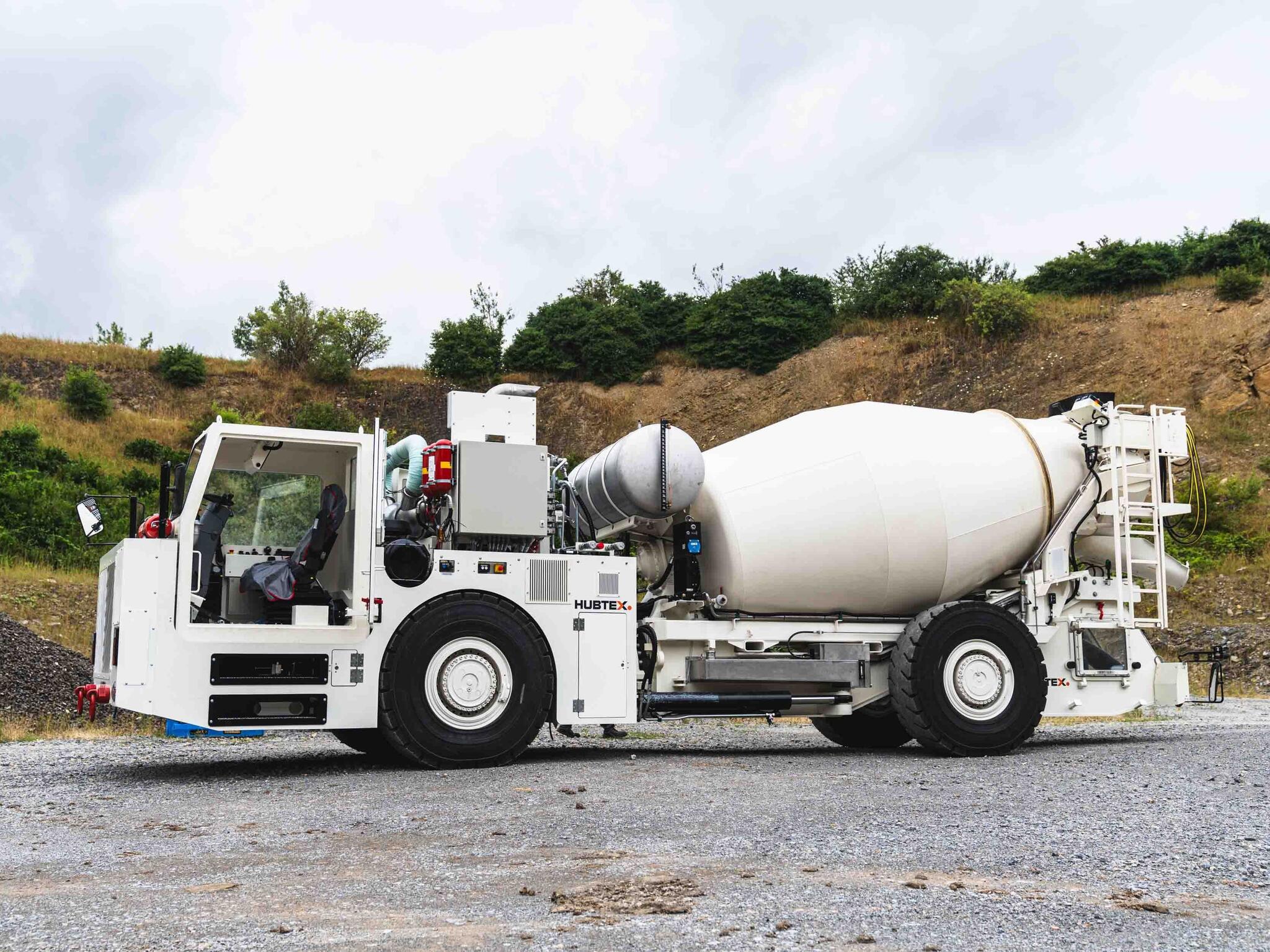
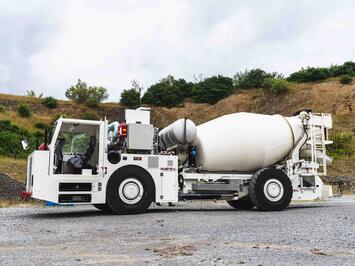
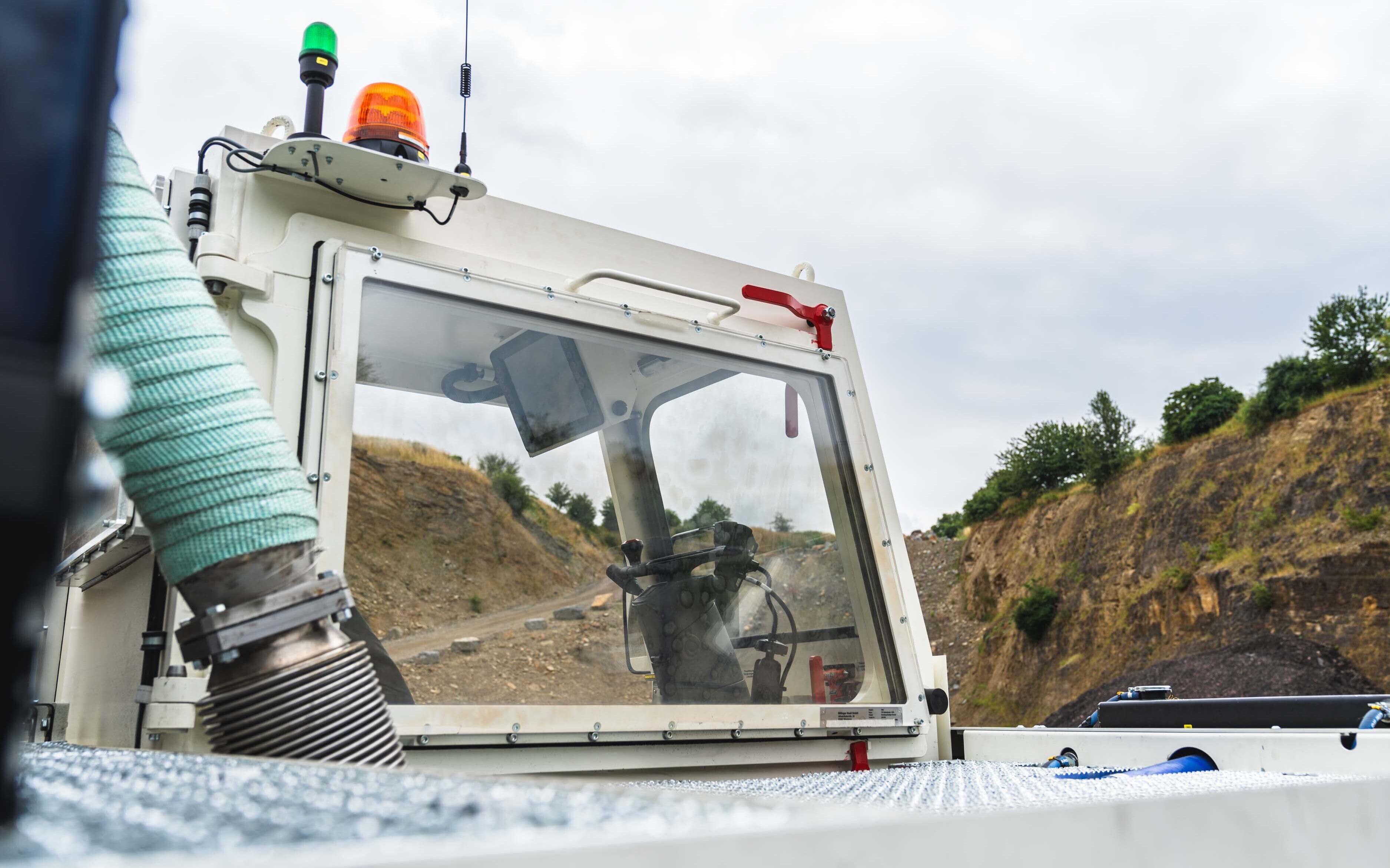
For underground operation, the VTF is equipped with two shielded, air-conditioned driver’s cabins, from which switching operations can be carried out. A fire suppression system is also provided. These features are tailored to operation within the controlled area.
Features
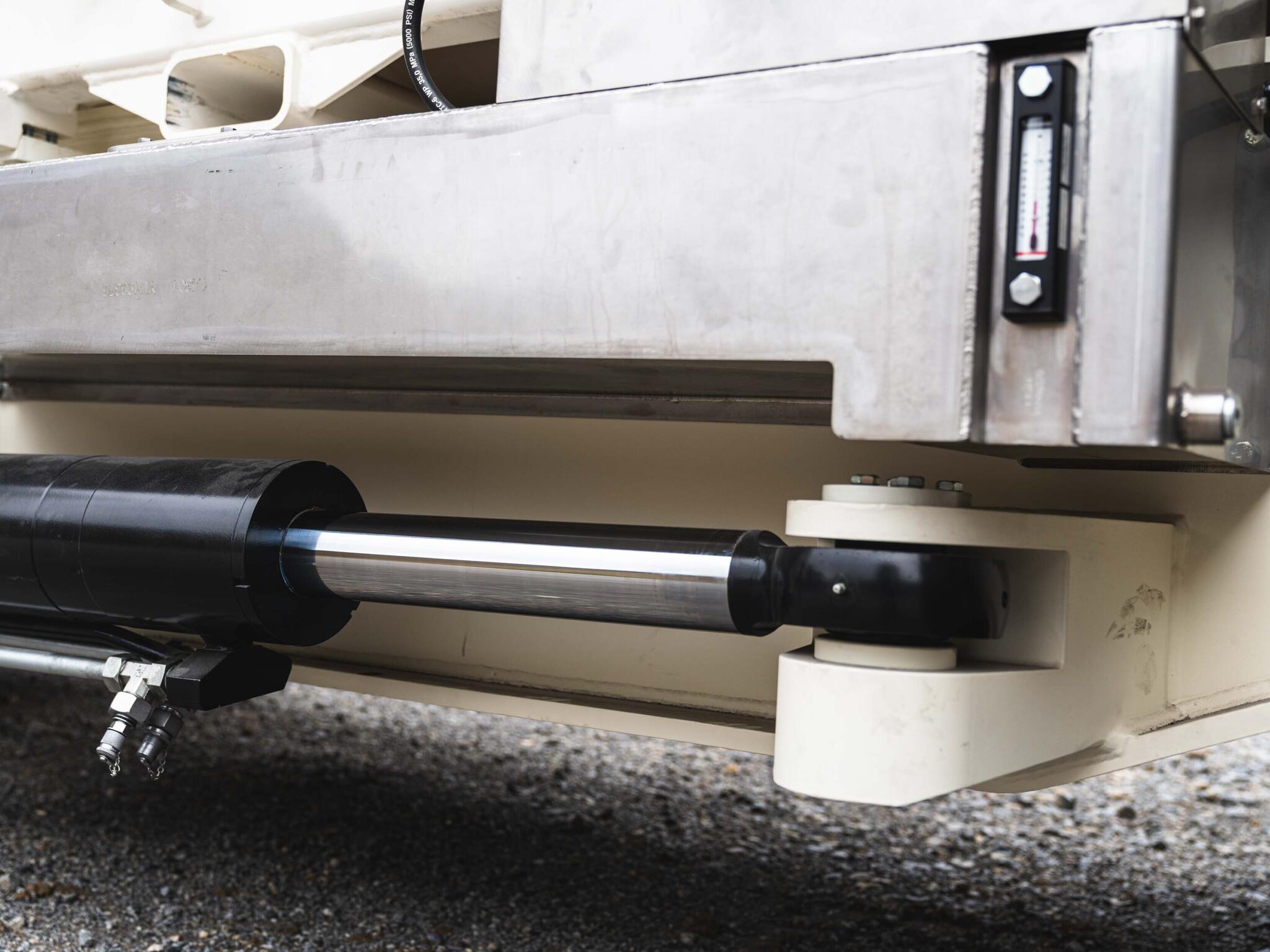
The VTF is designed as a trackless mining vehicle with an oscillating articulated joint for travel along the underground roadways. Its structure comprises an engine frame and a load frame, connected by the articulated oscillating joint. This configuration ensures the vehicle is engineered for the required manoeuvres within the underground roadway system. Steering is achieved by adjusting the articulation angle, making it fully aligned with the vehicle’s operating concept.
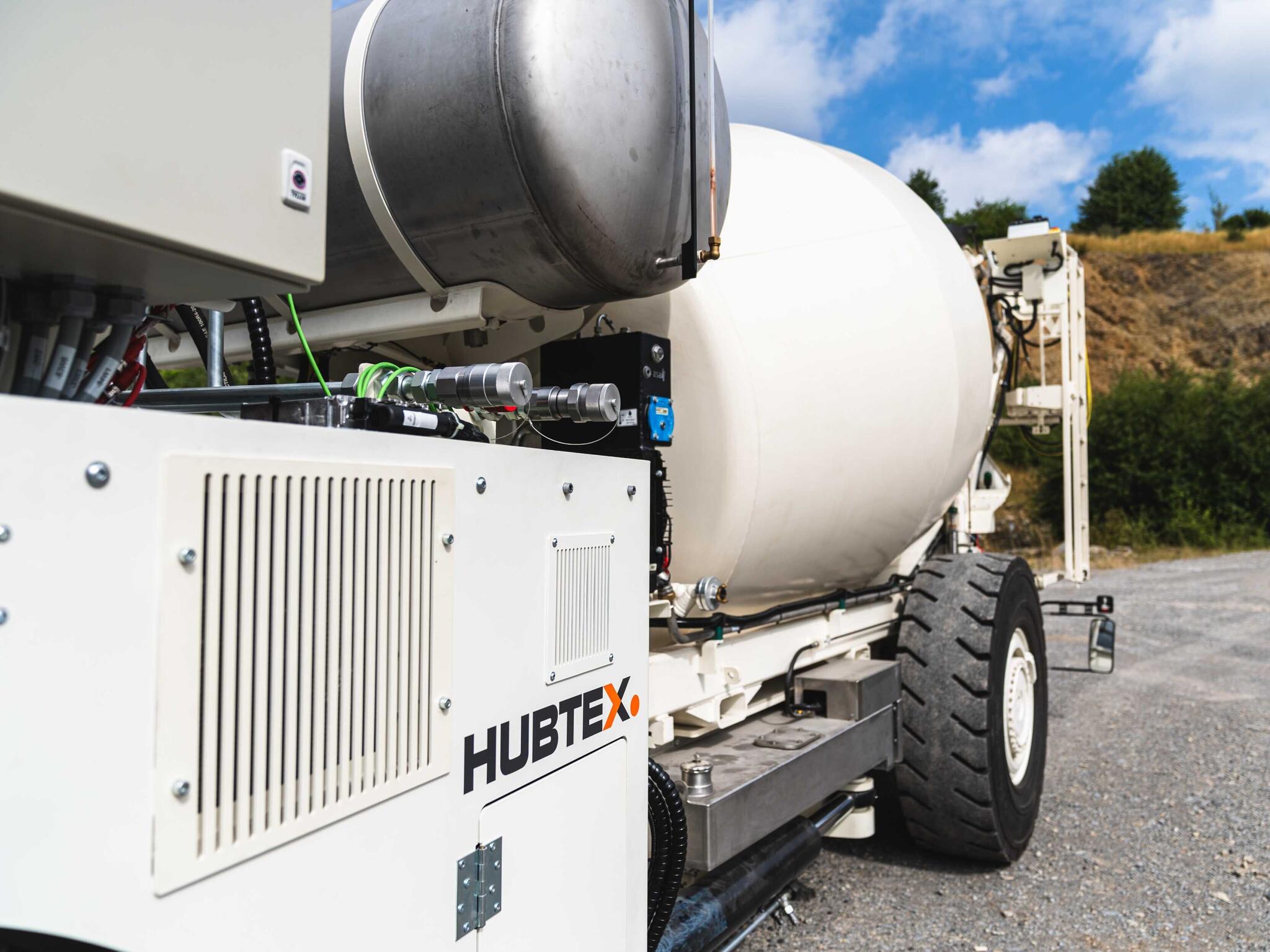
The materials are received in a mixing drum and kept in motion during transport. Material is loaded at the loading point, where the backfill compound is transferred into the drum. At the point of use, the mixture is discharged via an outlet chute. This makes material transfer a clearly defined step within the downstream workflow.
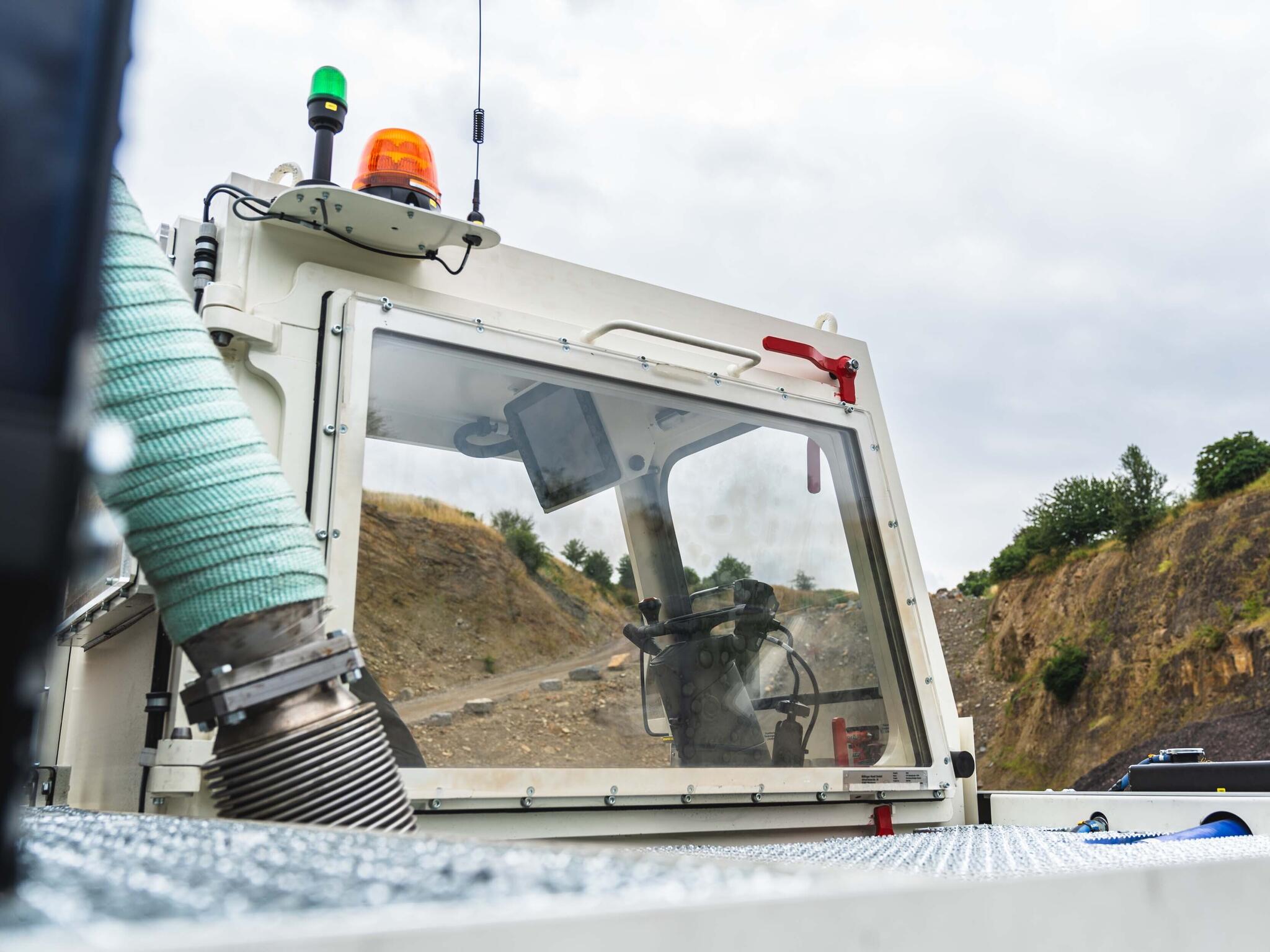
The vehicle features a shielded upper cab and a shielded lower cab. Both cabs are air-conditioned and designed for underground operation. Switching operations can be carried out from either cab, enabling control functions in both positions. The shielded design supports the requirements for operation within the controlled area.
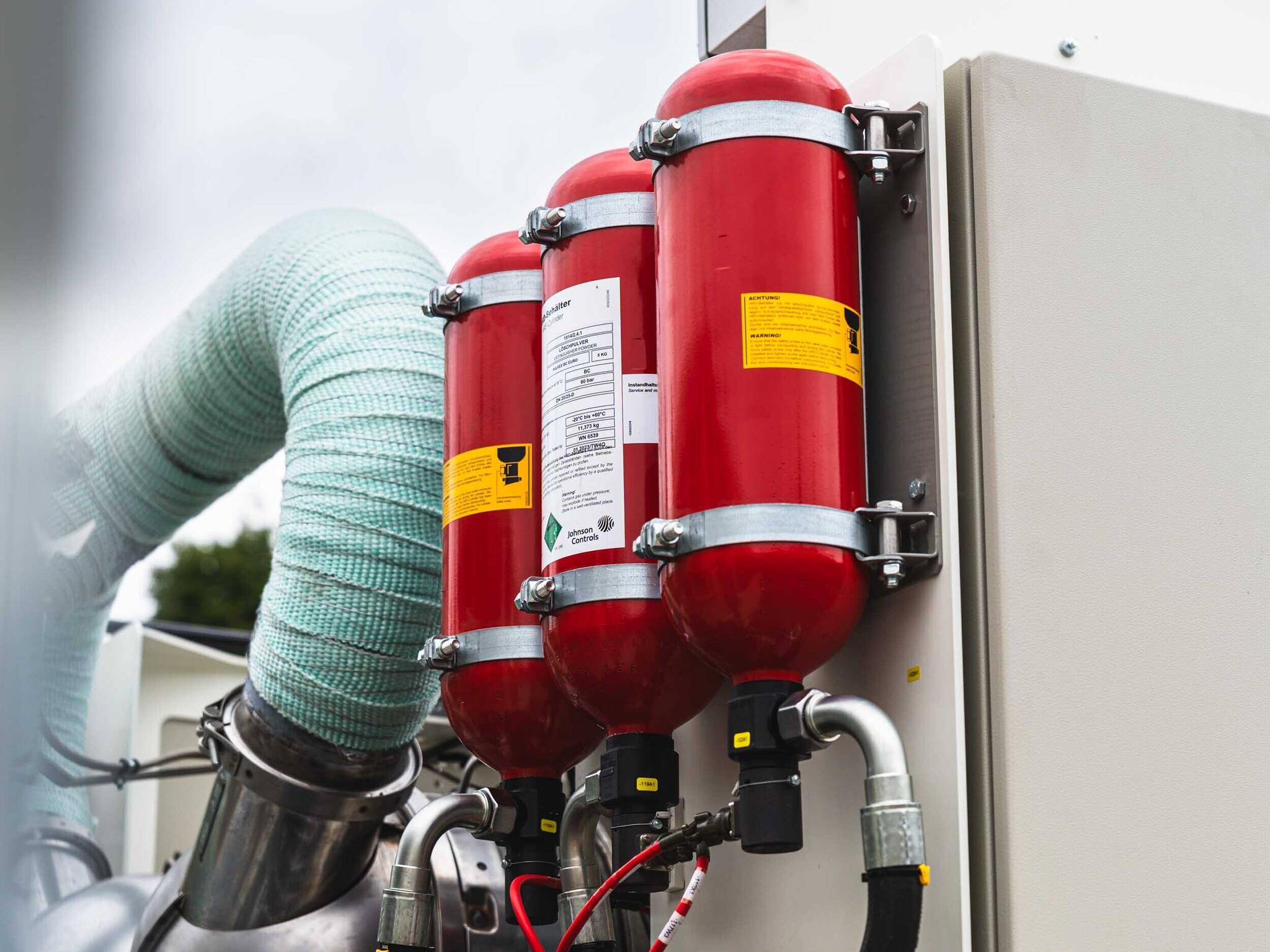
For underground operation, an HDR fire suppression system is provided. It is designed to tackle any incipient fires directly at source, addressing a safety-critical requirement for vehicle operation underground. Fire protection has also been integrated into the vehicle’s overall design concept.
Technical specifications
Vehicle weight: approx. 31.5 t
Load capacity: up to 20 t
Length: 10,500 mm
Width: 2,400 mm
Height: 3,500 mm
Diesel engine
Maximum speed: 3.47 m/s